
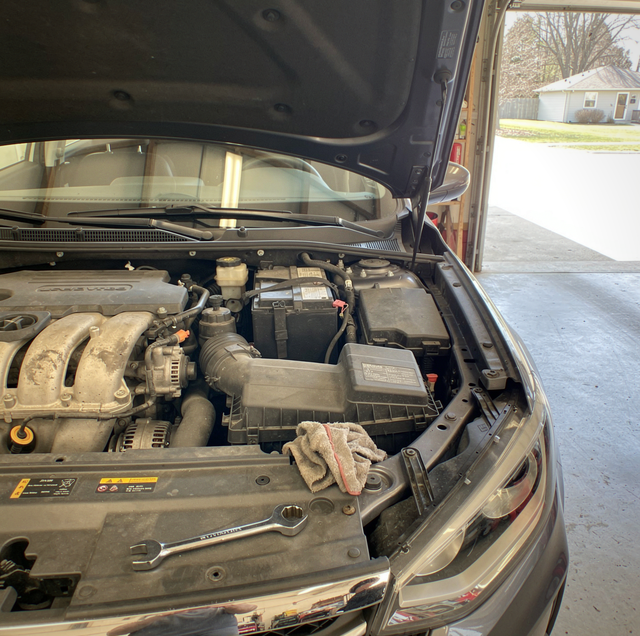
A seller who says the engine is "blown" rarely means the same thing as the next seller who uses the same word. One car threw a rod and cracked the block open. Another overheated once, blew a head gasket, and still turns over by hand. A buyer pricing either car starts somewhere else entirely: the shell's scrap weight, the parts still worth pulling, and whether the failure itself is cheap enough to fix that the car is worth buying whole. The engine is not what determines the number. The shell, the parts, and occasionally the vehicle itself are.
Quick Answer: Yes, a car with a blown engine is usually worth something. A buyer prices the scrap weight of the shell, the parts still in demand, and sometimes the vehicle itself, stacking all three rather than valuing the dead engine alone.
"Blown" Covers More Than One Kind of Failure
Sellers use "blown" as a catch-all for at least four distinct failures, and a buyer needs to know which one happened before an offer means much. A thrown rod usually ends the block outright: the rod has come through the side of it, and what is left has no future beyond scrap steel. A spun bearing is its near neighbor and often reads worse than it is. Metal has gone through the oil and the crankshaft journal is chewed, but the block itself frequently survives, and a machine shop can sometimes regrind the crank, so the engine may still price as a rebuildable core rather than dead weight. A blown head gasket is a different animal: combustion gases can leak into the coolant, or coolant can seep into a cylinder, but the block and heads underneath often survive intact. A snapped timing belt on an interference engine lets the valves and pistons meet inside a cylinder, which can bend valves or crack a piston, though the rest of the bottom end may be untouched. A seized engine from oil starvation has welded its internal parts together due to a lack of lubrication and belongs in the same dead-block category as a thrown rod. An overheat is the broadest of the four and can land anywhere on that range, from a warped head and a salvageable core to a cracked block that ends the engine outright.
The distinction matters because it determines whether the engine itself has any value beyond the shell and the parts around it, or whether it is just dead weight priced as scrap steel like everything else on the frame. A seller is usually better off describing what happened than naming a cause. "It made a loud knock, then a puddle showed up under it, and it wouldn't restart" tells a buyer more than "I think it threw a rod," because the second is a guess dressed up as a diagnosis, and a wrong guess can send the whole phone call in the wrong direction.
Whether your engine is an interference design matters more than the make. On an interference engine, a snapped belt almost always bends valves; on a non-interference design, the belt job alone can fix it.
Why the Rest of the Car Often Outweighs the Engine
A ten-year-old sedan with a dead engine can be worth more to a buyer than a rare, low-mileage import sitting in the same condition, and rarity has nothing to do with it. The transmission is frequently untouched by whatever killed the engine, and a transmission that still shifts and turns freely by hand is one of the highest-value single parts left on a car that won't run. The catalytic converter carries precious metals whose worth has nothing to do with what happened under the hood. Wheels and tires in good shape, body panels and doors without rust or collision damage, working headlights and taillights, an intact infotainment unit, clean seats, and the electronic control modules on a newer vehicle all get priced independently of the engine.
This is where the counter-intuitive part comes in. A common, high-volume model has thousands of other owners of the exact same car searching for the exact same used parts, so demand for its transmission, doors, and modules stays steady. A rare model that shares components with almost nothing else on the road can sit on a buyer's shelf for years, because there is no one shopping for that specific part. Rarity usually signals more value; for a parts buyer, it can mean less, since a buyer pricing parts inventory has to think about who will ever want it.
What Raises the Number and What Lowers It
Two sedans of the same year with the same dead engine can draw offers nowhere near each other, and every reason is visible from the driveway before anyone opens the hood. Each item below moves the figure in one direction or the other, and they stack rather than cancel out.
- A complete body, or one already picked over: Every panel, bumper, and door still attached adds both scrap weight and usable-parts value, so a car nobody has taken pieces off is worth more than one that has. The interior counts the same way: seats, the dash, the infotainment unit, and trim pulled ahead of the sale are parts the buyer can no longer resell, and the offer drops to whatever is left.
- The catalytic converter, still under the car or already gone: A converter in place is one of the single biggest swings in the whole number, because the precious metals in it price on their own terms regardless of what happened under the hood. A car with it cut off has lost that value before the buyer arrives, and whether it was stolen or sold separately makes no difference to the math.
- Whether it rolls: Four wheels on and turning, even under a tow strap, means the car goes up a ramp in minutes. Seized brakes, flat and rotted tires, or a frame settled into the ground call for a winch or a dolly system instead, and that extra equipment and labor come off the top.
- How a truck actually reaches it: An open driveway a flatbed can back into costs almost nothing to work. A car sunk in mud or ice, buried under debris, boxed in by other vehicles, or sitting at the end of a long unpaved lane adds time on-site, and retrieval cost comes straight out of what the buyer can offer.
- Fire and flood history: Fire warps and weakens metal and ruins wiring. Standing water contaminates fluids, upholstery, and the electronics a buyer would otherwise resell. Either one pushes the car toward plain scrap weight and away from the parts value that usually carries it.
- The title, in hand or missing: A clear title in the seller's name lets the transaction close on the spot rather than dragging out, which removes a risk the buyer would otherwise price against the offer. A missing title is not always a dead end, but the delay and the risk it adds land in the number.
Why an As-Is Offer Is a Real Answer
A caller who accurately describes the car gets a working number on that call rather than a placeholder. What makes that number worth having is what happens next: it holds when the truck shows up. The one thing that reopens it is a car that does not match the description, whether that is a converter that turned out to be missing, a title in a name nobody mentioned, or body damage the caller left out. That is why a buyer asks so many questions before quoting anything, since the accuracy of those answers is what lets the figure stand without a second negotiation in the driveway.
If the engine is overheating, knocking loudly, or losing power without warning, stop driving it. Continuing risks a sudden stall in traffic or hot oil reaching an exhaust component, and neither is worth the last few miles home.
Title, Plates, and Closing Out Your Liability
The paperwork is where sellers most often lose money or leave themselves exposed, not the sale price itself. Signing the title over properly, with both the seller's and buyer's signatures and any odometer disclosure required by the transaction, is what actually ends the seller's ownership on record. Skipping that step, or handing over a car with no title at all, leaves the vehicle legally tied to the seller's name until someone fixes the gap. Plates should come off before the truck leaves the property in almost every case, since plates generally belong to the owner rather than to the vehicle itself and are not meant to travel with a car once it's sold. From there, notifying the titling authority where the car is registered, commonly your state's DMV, closes the loop on the transfer and gets the release of liability on file, which is what actually protects a seller from being connected to whatever happens to the car next. Insurance is the last piece. A sensible approach is to keep the policy in force until the car is physically gone and the release of liability has been filed, then contact the insurer, say the vehicle was sold, and give the date it left. Carriers handle the effective date differently, so that call is worth making rather than guessing at what happens on its own.
Frequently Asked Questions
Not always. Over the phone, a buyer often tells a gasket failure from a bottom-end failure by asking whether the oil looks milky or the coolant is disappearing without a puddle underneath, both signs pointing to the gasket rather than a spun bearing.
Yes, and it is routine rather than a special case. What matters is saying so when you call, because the buyer dispatches based on the pickup's needs, and a truck carrying a winch and wheel dollies is not always the one that would otherwise come. A driver who arrives expecting to roll a car onto the deck and finds four frozen wheels has to leave and return, costing the seller a day.
Fluid is the first check. Transmission fluid that is dark, gritty, or smells burnt says the clutch material inside has already cooked, and the unit gets priced as scrap instead of a resale part. Contamination is the other disqualifier: coolant or water in the fluid turns it milky and ruins the friction surfaces. Physical damage counts too. If whatever killed the engine also cracked the bellhousing or sheared a mounting ear off the case, the housing is finished even when everything turning inside it is fine.
The dashboard is the part sellers forget to mention. Whether the temperature gauge climbed, an oil light came on, or a check-engine light had been lit for weeks beforehand narrows the likely failure faster than any noise you can describe, and none of it asks you to name a cause you are not sure of.
Not always. If the title has been signed in advance and identification has already been confirmed by phone, many buyers can complete the pickup and paperwork with someone else present, or leave a receipt at the location. Confirm the arrangement before the truck is dispatched.
Both come up constantly on a car that has sat outside for years. Rusted plate screws usually give up to penetrating oil left to soak, and a hand impact driver; a plate that snaps in half still counts as the plate for return or transfer purposes. If the plates were stolen or lost outright, the titling authority where the car is registered typically has a way to report it, and handling it before the truck arrives is easier than chasing it afterward.
Blown engine or not, get one number for the whole car — describe the failure and the buyer prices the shell, the parts, and the vehicle together. Auto Wreckers Milwaukee Towing & Recycling serves Milwaukee, West Allis, Waukesha, and the surrounding southeastern Wisconsin metro. Call (414) 441-2719.
