
Why Do Junk Car Prices Change From Month to Month?
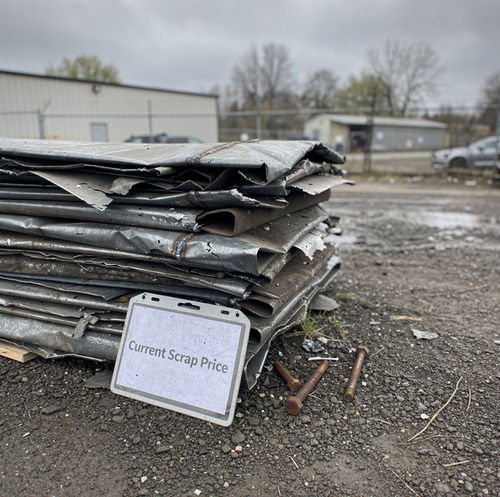
Call three buyers about the same dead sedan in March, then call three more in July, and the numbers rarely match. Nobody is guessing at random and nobody is trying to trick you. A junk car is priced off a handful of markets that move on their own schedules, and those markets shift the payout up or down before anyone even looks at your specific vehicle. Once you know what is actually moving, the swings stop feeling mysterious and start looking like ordinary supply and demand.
Scrap Steel Trades Like a Commodity
Most of a junk car's weight is steel, and steel is bought and sold the same way corn or crude oil is: as a commodity with a price per ton that moves with the broader economy. Mills need a steady flow of scrap to feed new production, and how much they are willing to pay for it depends on how much building, manufacturing, and construction is happening at that moment. When factories are running hot and steel demand is strong, the price per ton climbs and junk buyers pass some of that increase along in their offers. When output slows, the price per ton eases back down, and quotes drift lower with it.
Export demand adds another layer. Scrap steel gets shipped overseas in large volumes, and shifts in shipping costs, tariffs, or demand from foreign mills can push the domestic price in either direction within a matter of weeks. None of that has anything to do with your car's mileage or trim level. It is simply the raw material market doing what raw material markets do, and a junk car's base value rides on top of it.
This is why the same vehicle, in the same condition, can bring a noticeably different number depending on the week you call. The car has not changed. The floor under it has.
Vehicle Weight Sets the Baseline, but the Baseline Itself Moves
Weight is the multiplier that turns a shifting scrap price into an actual dollar figure. A buyer takes your vehicle's curb weight, converts it to tons, and multiplies by whatever steel is paying that week. A heavier pickup or van will always out-earn a lighter compact on scrap value alone, because there is simply more metal to sell. But because the per-ton number is not fixed, that same heavy truck can be worth meaningfully more in a strong month than in a soft one, even though its weight never changes.
Think of weight as the multiplier and the commodity price as the number being multiplied. Both matter, but only one of them holds still. A seller who remembers a big number from a friend's truck a year ago is often comparing two different points on that moving scale, not two comparable vehicles.
Non-ferrous metal in the car complicates the math further, and in a good way for the seller. Aluminum wheels, an aluminum radiator, and copper wiring pay more per pound than plain steel, and those metals trade on their own separate markets that do not always move in the same direction as steel at the same time. A car heavy on aluminum and copper can hold its value better in a month when steel alone is soft.
The Catalytic Converter Market Swings Even Harder
If scrap steel moves gradually, the catalytic converter market can swing hard and fast. Inside the converter's ceramic core sit small amounts of platinum, palladium, and rhodium, precious metals that trade on the same exchanges as gold and silver. Rhodium in particular has a history of dramatic price runs, at times moving by large percentages within a single quarter as automakers, refiners, and investors compete for a tightly limited supply.
Because a working converter can represent a real share of a junk car's total value, especially on a lighter vehicle where the steel floor is modest, a spike or dip in precious-metal pricing shows up in junk car offers faster than almost anything else in the equation. A buyer who quoted generously for converters two months ago may quote more conservatively today, not because they changed their mind about your car, but because the metal inside that converter is worth measurably less on the day you call than it was when the last number got set.
This single part explains much of the seemingly random variation sellers notice from one month to the next. It is a small, fast-moving market riding inside a slower, bigger one.
Parts Demand Rises and Falls With the Calendar
Scrap value is only half the story. A car that still runs, or still has usable components, carries added worth from the used-parts side of the business, and that demand is seasonal in a way scrap steel is not.
Batteries and starters see heavier demand when cold weather sets in, and more vehicles start struggling to turn over. Radiators, air-conditioning compressors, and cooling fans run faster once warm weather arrives, and drivers start fixing overheated cars. Suspension and undercarriage parts stay in steady demand year-round in places where road salt and constant freeze-thaw cycling wear those components out faster than in milder climates, since a still-drivable car in that kind of setting often needs those exact replacement parts long before the engine gives out.
A dismantler pulling parts to meet seasonal demand can afford to pay more for a complete, running donor vehicle during the season when those parts sell fastest, and less during a slower stretch when the shelves are already full. That pattern alone can shift what a running car is worth by a real margin from one season to the next, separate from anything the metal markets are doing.
The Supply of Junk Cars Itself Moves
Prices are not only about what buyers are willing to pay. They are also about how many cars are competing for that money at any given moment, and that number is not steady throughout the year.
Cold snaps kill weak batteries and thicken old fluid to the point where a tired engine can't turn over, so no-start calls cluster in the coldest stretches. Long stretches of summer heat strand a different set of vehicles the rest of the year, and a car parked through a hard winter without moving often refuses to start again once the weather warms, thanks to seals, belts, and tires that stiffened while it sat. Each of those patterns pushes a wave of vehicles toward buyers at roughly the same time, and when supply rises faster than a buyer's capacity to process it, individual offers can soften simply because there is more competition among sellers for the same demand.
The reverse happens too. During a quieter stretch, with fewer cars coming in, a buyer with trucks and space to fill may sharpen an offer just to keep volume steady. None of this is about your specific vehicle. It is about how many other vehicles just like it showed up that same week.
Fuel and Transport Costs Ripple Into the Number
Getting a dead car from a driveway to a dismantling yard costs money, and that cost is baked into every offer whether it is itemized or not. Diesel and gas prices move independently of the scrap and parts markets, and when fuel costs climb, the towing side of the transaction gets more expensive to run. A buyer covering that cost internally, rather than charging you for the tow, has less room in the number they can offer while still covering their own expenses.
This effect tends to be smaller than the swings in scrap steel or converter metals, but it adds another moving piece to a system that already has several. Distance also plays into it: a buyer sending a truck a longer distance incurs a higher transport cost than one picking up close by, and that math shifts with fuel prices themselves.
Reading the Swings Before You Sell
None of these markets move in lockstep, which is exactly why one month can look strong across the board and another can look mixed, with steel up but converter values down, or parts demand high but fuel costs eating into the margin. A few practical takeaways follow from that:
- A quote reflects the day, not just the car: The same vehicle can be worth a different amount two weeks apart purely because the underlying markets shifted, with nothing about the car itself changing.
- Get more than one number before deciding: Buyers watch these markets on their own timelines and carry different overheads, so asking around gives a truer read of where things stand right now than any single quote.
- A soft month is not permanent: Scrap and precious-metal markets cycle. A car that seems to be worth less this month is not stuck at that number forever, though most sellers are better off taking a fair offer today than gambling on a swing that may or may not arrive.
- Condition and completeness still matter most: Market timing moves the number up or down, but a running, complete car with its converter intact will out-earn a stripped, seized one in any market, strong or weak.
Understanding the moving pieces will not let you predict next month's exact number, but it does explain why the figure you hear rarely matches the one a neighbor mentioned a season ago, and why getting a current quote beats relying on an old one.
Frequently Asked Questions
Almost certainly because one or more of the underlying markets shifted between those two calls. Scrap steel, precious metals inside the catalytic converter, and seasonal parts demand all move on their own timelines, so a quote from a few months back reflects conditions that may no longer apply. The car itself is not the variable; the market is.
It can, mainly through parts demand and vehicle supply rather than the metal markets themselves. Cold weather pushes more no-start vehicles toward buyers at once and lifts demand for batteries and starters, while warm weather shifts that demand toward cooling-system parts. Those seasonal patterns can move an offer by a real margin on top of whatever the scrap and converter markets are doing.
Scrap steel and precious-metal prices are public commodity data, and a quick search on any given day will show you the general direction those markets are moving. That will not hand you an exact dollar figure for your car, since weight, condition, and completeness still shape the final number, but it gives useful context for whether offers are likely to be running strong or soft that week.
Sometimes, but it is a gamble either direction, and a parked car does not hold its value while you wait. Fluids settle, seals dry out, tires develop flat spots, and rust keeps working on the frame and undercarriage while it sits. Any gain from timing the market has to be weighed against what the car loses just by sitting through another season.
Because the precious metals inside it, platinum, palladium, and rhodium, trade in much smaller total volumes than steel does, so shifts in supply or demand hit the price harder and faster. A relatively small change in refining output or industrial demand for those metals can swing the value of a single converter noticeably, even in a week when steel itself barely moved.
Somewhat, since a running car's value comes from a mix of scrap weight, converter metal, and usable parts, while a non-runner leans harder on scrap and converter value alone. A running vehicle that dismantlers want for parts can hold steadier value through a soft scrap month than a stripped shell that has only its metal left to offer.
Get a current quote before the market shifts again — same-day pickup with free towing on any junk car, running or not. Auto Wreckers Milwaukee Towing & Recycling serves Milwaukee, West Allis, Waukesha, and the surrounding southeastern Wisconsin metro. Call (414) 441-2719.
