
Running or Not: What Decides Junk Car Value
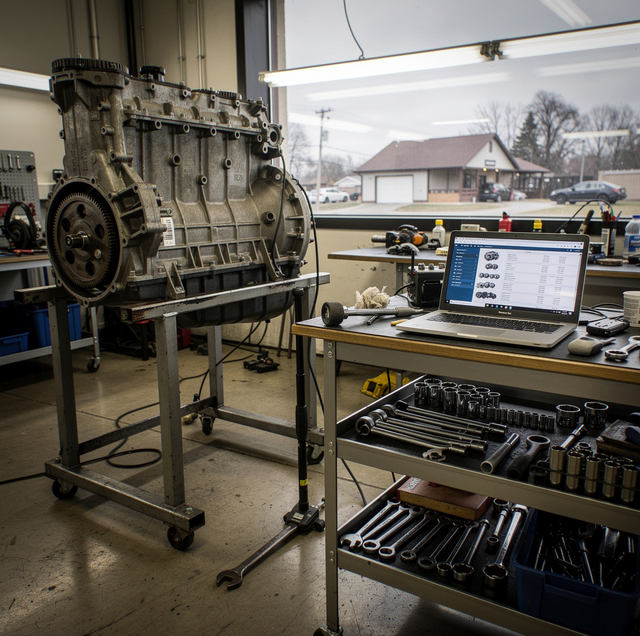
The Key Turns, or It Doesn't, and That's Not the Whole Story
Turn the key and the engine catches, or it doesn't, and most people assume the car that starts is automatically worth more than one sitting dead in the driveway. Most of the time that's true. But it's not true because a running engine is magic. It's true because a running car opens up more ways for a buyer to recover value from it, and every one of those paths has to clear a cost before it adds anything to the number you're offered.
A non-running car isn't worthless just because it won't start. A running car isn't automatically valuable just because it moves under its own power. What actually sets the number is a short list of factors that stack on top of each other: weight, metal content, parts condition, the catalytic converter, and the title in your hand. Whether the key turns is one input among several, not the whole equation.
How a Running Car Gets Valued
Drivability opens the used-parts market: When a car runs and drives, a buyer can often resell whole assemblies- the engine, transmission, alternator, starter, working electronics- into the used-parts market instead of scrapping them for weight alone. A running drivetrain is worth more, piece by piece, than it is as scrap steel, and that difference usually accounts for the bulk of the extra value.
Fewer unknowns, less risk: A car that starts and drives lets a buyer confirm the transmission shifts, the engine doesn't knock, and the electronics respond, all in a few minutes. A non-runner requires more guesswork about what's actually wrong, which shifts risk onto the buyer and tends to get priced in.
Tow cost or no tow cost: A running vehicle can sometimes be driven onto a trailer or flatbed under its own power, which is faster and requires less effort than winching a dead vehicle. That efficiency doesn't always move the needle much, but it's part of the picture.
None of this means a running car with a rotted-out frame is worth more than a dead one with a clean body and a good engine. Which brings up the part people miss most: road salt and slush eat away at the undercarriage and frame every winter, and a car that starts fine and drives fine can still be structurally done. A frame that's rusted through has no resale path as a parts car and no safe path back to the road, running or not.
How a Non-Running Car Gets Valued
A car that won't start isn't evaluated the same way, but it isn't ignored either. Buyers look at three things: how much the vehicle weighs (scrap steel value), whether specific parts are still sound enough to pull and resell, and whether the catalytic converter is present and intact.
Weight is the floor: Even a car that's rusted, wrecked, or completely dead still has a base scrap value tied to its steel and metal content. That's the number under everything else. A heavier vehicle, a full-size truck or SUV compared to a compact car, has more scrap weight and a higher floor before anything else gets factored in.
Parts salvage adds on top: If the transmission, catalytic converter, alternator, or body panels are still usable, a buyer can pull and resell those pieces even if the engine itself is seized or the frame is bent. A non-runner with a good transmission and an intact converter can end up closer to a running car's value than you'd expect.
Tow and transport cost gets factored in: A dead vehicle has to be winched, flatbedded, or towed, which takes more time and equipment than driving a car onto a trailer. That cost gets weighed against the scrap and parts value before a number gets set.
Cold weather explains a lot of non-runners who have nothing structurally wrong with them. Hard winter cold thickens engine fluids and pushes a weak battery past the point of turning an engine over, so a car that ran fine in October can sit dead by January through no fault of the vehicle itself. Summer heat and long stretches of sitting idle strand cars too, just less often. A no-start from a dead battery or thick fluids is a very different situation from a no-start caused by internal engine damage, and buyers generally treat them differently once they know which one they're looking at.
Running vs. Non-Running: A Side-by-Side Look
| Factor | Running Vehicle | Non-Running Vehicle |
|---|---|---|
| Primary value source | Parts resale potential, drivability | Scrap weight, salvageable parts |
| Buyer's risk | Lower (condition confirmed by test drive) | Higher (mechanical issues unverified) |
| Transport | Can often drive onto trailer/flatbed | Requires winching or towing |
| Engine/transmission | Sellable as working units | Sellable only if internals are sound |
| Frame/body rust | Can still tank value even if it runs | Still cuts parts value and recoverable weight |
| Catalytic converter | Adds value if present and intact | Adds value if present and intact |
| Title status | Affects value either way | Affects value either way |
| Scrap floor value | Applies as a baseline | Applies as a baseline |
Scrap Steel Sets the Floor, Not the Ceiling
Every junk car, running or not, has a base value tied to commodity scrap steel pricing. That number moves with the metals market, not with the calendar or the car's age. When scrap steel prices are up, the floor value for every vehicle rises with it. When prices dip, that same floor drops, and the gap between a "nice" non-runner and a rough runner can shrink or widen depending on where the market sits that week.
This is why two vehicles of the same year and mileage can land at different numbers a few months apart with nothing about the cars themselves changing. The metal market moved, not the vehicle. It's also why weight matters more than most people expect: a heavier vehicle carries more scrap steel, which means more of its value is locked in before parts condition or drivability even enters the conversation.
The Catalytic Converter Factor
Few single parts swing a junk car's value the way the catalytic converter does. It contains precious metals (platinum, palladium, rhodium) that trade on their own commodity markets, often independently of scrap steel. A vehicle with its original, intact converter still attached offers real added value beyond its scrap and parts numbers.
That value disappears fast if the converter has been removed or cut out, which happens more often than owners expect, sometimes by a previous shop, sometimes by theft before a vehicle was ever brought in. It's worth checking underneath a vehicle before assuming the converter is still there. A missing converter doesn't tank the whole number, since weight and other parts still count, but it does remove one of the bigger single-item value boosts available on either a runner or a non-runner.
Title Status Changes the Math for Both
Whether the car runs or not, the title in your hand affects what a buyer can offer and how the sale gets handled. A clean title in your name is the simplest transaction: ownership transfers cleanly, and the value reflects the vehicle itself with nothing else in the way.
A title with a lien still on it, a lost title, or a title that's been signed over but never transferred all add extra steps to the process. None of that automatically kills the sale; market-based buying generally works with sellers to sort out title transfer as part of the deal, but it's a factor worth having sorted out (or at least understood) before towing gets scheduled, since it can affect how quickly payment happens.
What Can Make a Non-Runner Worth More Than a Runner
It happens more than people assume. A dead vehicle with sound transmission, an intact catalytic converter, solid weight, and a clean title can outpace a running vehicle with a rusted frame, a stripped converter, and title paperwork that isn't sorted out. Drivability is one factor among several, not a trump card over everything else. The vehicle that scores well across weight, parts condition, converter status, and title is the one that comes out ahead, whether or not the key turns.
Getting an Honest Number Either Way
The most reliable way to know where a specific vehicle lands is to have it inspected directly rather than to guess from a description. Fair market value pulls together the same factors covered above (weight, scrap market conditions, parts condition, converter status, and title) into one number, and it applies the same way whether the vehicle runs, doesn't run, or falls somewhere in between. Any make, and any condition, gets evaluated on that same basis, from a clean-title runner to a non-runner that's been sitting for years.
Frequently Asked Questions
Not nearly as much as people think. High mileage on a running vehicle can mean worn-out major components with little resale value, while a low-mileage non-runner that stalled from a dead battery or a single mechanical failure can still have strong parts inside. Mileage is a data point, not a deciding factor on its own.
Yes. Even an engine that's blown internally usually still has core value; it can be sold as a rebuildable core rather than scrapped for nothing, since rebuilders pay for the block and heads regardless of what failed inside. On top of that, everything bolted to the outside of the engine- the alternator, starter, AC compressor, and fuel injectors- comes off and sells separately whether the engine itself runs again or not.
Indirectly. Certain brands and models have stronger demand in the used-parts market, so a non-running vehicle from a popular model can sometimes see more parts-based value than a less common model in the same condition, independent of whether either one runs.
Extended sitting time often means flat-spotted tires, degraded fluids, and a dead battery that requires more than a simple jump-start, but none of that changes the scrap weight or the condition of major components like the transmission or converter, which are evaluated separately from how long the vehicle has been parked.
Yes, drivability for valuation purposes generally means the engine turns over, and the vehicle can move under its own power, not that it's roadworthy or inspection-ready. A car that runs but has failed brakes, a cracked windshield, or other issues still gets evaluated with the running-vehicle factors in play.
Usually not, and it can lower the number. Buyers value a vehicle as a whole unit with all its major components intact, since pulling parts yourself removes exactly the pieces (alternators, batteries, catalytic converters) that add the most value, and a vehicle missing key parts is often evaluated closer to bare scrap weight.
Two vehicles can sit side by side in a driveway, one running, one dead, and the dead one can still walk away with the bigger number if its transmission, converter, and title are in better shape. Get the metal, the parts, the converter, and the paperwork looked at honestly, and the running-versus-not question stops being the mystery it seems like from the driveway.
Get a free junk car quote — tell us the year, make, and condition (running or not) and get a fair, market-based number with free towing and same-day payment. Auto Wreckers Milwaukee Towing & Recycling serves Milwaukee, West Allis, Waukesha, and the surrounding southeastern Wisconsin metro. Call (414) 441-2719.
