
What Gets a Car Out of an Underground Parking Garage?
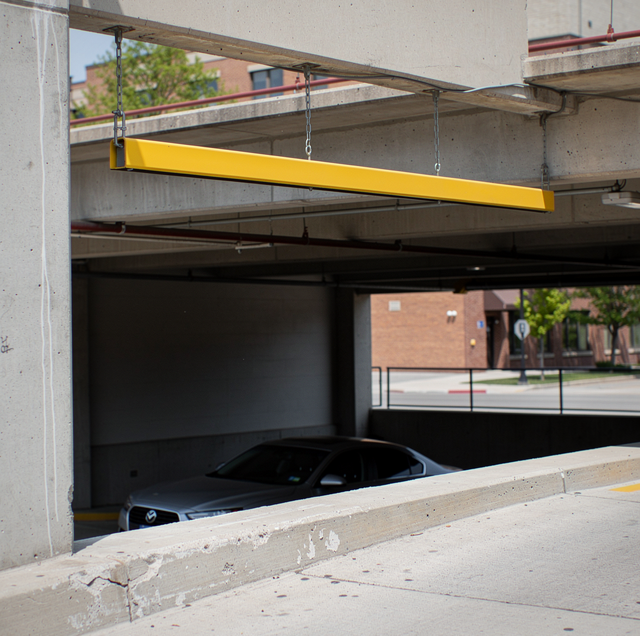
Your car sits two levels down, nose-in against a poured concrete wall, with a painted stall line on either side and the ramp behind it. The key does nothing. Whatever happens next travels the path you drove in on, in reverse, and that path has a ceiling over the whole length of it.
What happens next is a phone call, and the questions on it are about the building. How high the bar at the entrance hangs. Which level the car is on. How much room stands behind it before the aisle turns. Those answers are fixed while the car is not, and they reach a dispatcher before any equipment is chosen and long before a truck is pointed at the entrance you drove through.
Two Levels Down, the Measurements Belong to the Building
A stuck car is a moving target. It may not start today and start tomorrow; it may roll or sit on a locked wheel, and its weight depends on what is still sitting in the trunk and whether the tank is full. The structure around it does none of that. The height at the entrance and the width of the aisle behind the car were poured once and have not moved since.
So the useful order runs the other way around. You start with what cannot be altered and let it rule equipment in and out, instead of starting with the car and hoping something fits around it. It is the working method behind a recovery below grade, and it is why the first questions are about a building you have parked in for years without ever measuring a single part of it with a tape measure.
A Posted Clearance Speaks for the Whole Structure
The bar hanging at the entrance is a document, and it is the one document in this job you already own. Whatever number is painted on it applies to the drive you are about to send a truck on, and it is not the height of the opening you can see through. It is measured against the lowest thing anywhere on the route behind it.
The low point can sit well below the deck itself. A sprinkler main crossing an aisle and a supply duct dropped below a beam both hang under the structure they run through, and both went in after the concrete was poured. The bar comes down to whichever sits lowest, which is why a structure with generous ceilings can still post a modest number.
For a dispatcher, the number does one job before anything else is asked. A truck taller than the posted clearance never leaves the yard for that address. Read the bar, read it again at the ramp, and give both figures on the call.
Grade Changes and Column Spacing Along the Route Out
The constraints are met in the order a truck encounters them while driving out, from the entrance inward, because the first one that fails ends the trip. The bar comes first. Then the ramp. Then the turn at the head of the ramp, and last the aisle your car is parked off.
The ramp is where length begins to matter. At the crest, where a sloped ramp meets a level deck, the grade changes over a short distance, and a long vehicle bridges that change on its tires while its belly hangs in the middle. The angle it can take is twice the angle whose tangent is twice the lowest clearance divided by the wheelbase. Put eight inches under the middle of a twenty-foot wheelbase and the vehicle clears a break of about seven and a half degrees. Halve the wheelbase and the same eight inches clears about fifteen.
The turn is the constraint nobody checks, and everybody discovers. A truck that gets down a ramp and cannot swing the corner at the top has to reverse the whole route, past columns, in an aisle sized for the cars you park beside. So the corner is measured from the entrance before the descent, rather than from a driver's seat halfway down.
How Far Can a Wrecker Reach Into a Parking Stall?
Further back than the stall line. Manufacturer specifications list an extended underlift reach of 79 inches on light-duty integrated wreckers, which is 6 feet 7 inches of standoff. The truck's own tires stay out in the aisle, and only the underlift crosses into the stall.
That changes which number you need to measure. The truck does not have to fit where your car is parked; it has to fit where it stands while it reaches, and the underlift covers the difference. Aisle width becomes the number that matters, not stall depth. The wheel lift also takes the car by its tires from behind, so nothing under the front bumper has to be reachable.
Published Truck Dimensions Against the Ones You Measured
A carrier and an integrated wrecker will both bring a car up a ramp, and the building picks between them without being asked. Both sets of dimensions are published.
A light-duty carrier's published specifications list decks of 19, 20, 21 and 22 feet, a deck width of 96 or 102 inches, and a cab-to-axle dimension between 120 and 156 inches depending on the deck. The minimum chassis rating is 15,000 pounds, or 19,500 pounds once a wheel lift is added to the back.
Those numbers describe a machine that needs the floor to cooperate twice over. The deck tilts back to the ground, and the car gets winched straight up it, so behind the truck there has to be another deck length of clear, level, straight run with nothing overhead, which in a garage means twenty-odd feet of aisle lined up with the truck and no column in it. The cab-to-axle figure carries a wheelbase to match, and a wheelbase near twenty feet is the one that runs out of breakover at the crest of the ramp on the way back up. The integrated wrecker fits a different set of constraints: a minimum chassis rating of 11,000 pounds, a minimum cab-to-axle dimension of 60 inches, and a reach of 79 inches that keeps it out in the aisle. It never needs the car to come to it and never needs straight run behind it, because the car leaves on its own back wheels.
None of that ranks one machine above the other. The measurements do the picking here, before anyone turns your key. A carrier that reaches your entrance and cannot get down has spent the trip, and your car is still two levels below the bar it stopped at.
The Numbers an Operator Establishes Before Dispatch
An operator reads the gross axle weight rating off the sticker inside the driver's door before the underlift is ever unfolded, and works to the figure for the end of the car that will come off the ground. Manufacturer specifications list a wheel-lift capacity of 4,000 pounds on a typical integrated wrecker and 3,500 pounds on a typical carrier's wheel lift, and the door sticker is the only document that indicates whether a particular car falls under either.
Your part is short, and it happens before the pull starts. You meet the truck at the car with the keys and whatever badge opens the gate, hand both over, and walk out of the aisle before the line takes any load. After that, the numbers gathered before anyone drove are doing the work, and the truck at your bumper is the one those figures allowed. It is a paper label inside a door you open every day, and it holds the last number a dispatcher needs.
A winch manufacturer's operator guide warns spectators to stay a rope length from a loaded line, because a wire rope that breaks under load snaps back. An aisle between columns does not hold that distance: leave before the winch takes load.
Frequently Asked Questions
A surface lot gives a truck level ground and an open ceiling. Below grade, you have neither, and the route out is the only route out. Your own car sits on a fixed path with a ceiling over it and a turn at the top a long truck may not take. Everything you ask a truck to do down there happens inside dimensions you cannot change.
By measuring the lowest obstruction along your driving route instead of the doorway. A sprinkler main crossing an aisle and the soffit where the ramp meets the deck are both candidates, and the smaller of the two is the one a truck is measured against. A tape and a phone light will get you a usable figure from the floor, and the operator confirms it before the descent.
If it rolls and you can steer it, yes, and it changes which truck you need. Moving your car to the entrance apron or a ground-level stall puts it on a level floor with nothing over it, which opens the job to equipment that could not have come down for it. Ask before you assume your car leaves from where it stopped.
Management holds what an operator cannot reach: the gate credential and, where the bar is removable, the bar itself. A recovery also occupies an aisle for the length of the pull, which is a conversation with the building and not with the driver. Making that call before your truck is dispatched keeps it from arriving at a gate nobody can open.
The operator does, to the highest fixed point with the boom stowed and the light bar counted, then works to a margin under your posted figure. That margin exists because a ramp changes a truck's attitude: nosing down a grade lifts the tail and the tallest point moves while the truck drives. The number on your entrance bar is static, and your ramp is not.
It can, and it is a separate question from whether the truck fits. The building code minimum live loads for passenger vehicle garages are 40 pounds per square foot, spread out, and 3,000 pounds concentrated on a four-and-a-half-inch square; that table is written for passenger vehicles. A recovery truck is not one. Whether your own deck allows one belongs to your building's rating and the engineer who holds it.
If the car is below grade, a call that starts with the posted clearance and the level it is on gets the equipment picked at dispatch — the decision has to be made before a truck reaches the entrance, because a truck that arrives before that call is made turns around at the bar. Auto Wreckers Milwaukee Towing & Recycling serves Milwaukee, West Allis, Waukesha, and the surrounding southeastern Wisconsin metro. Call (414) 441-2719.
