
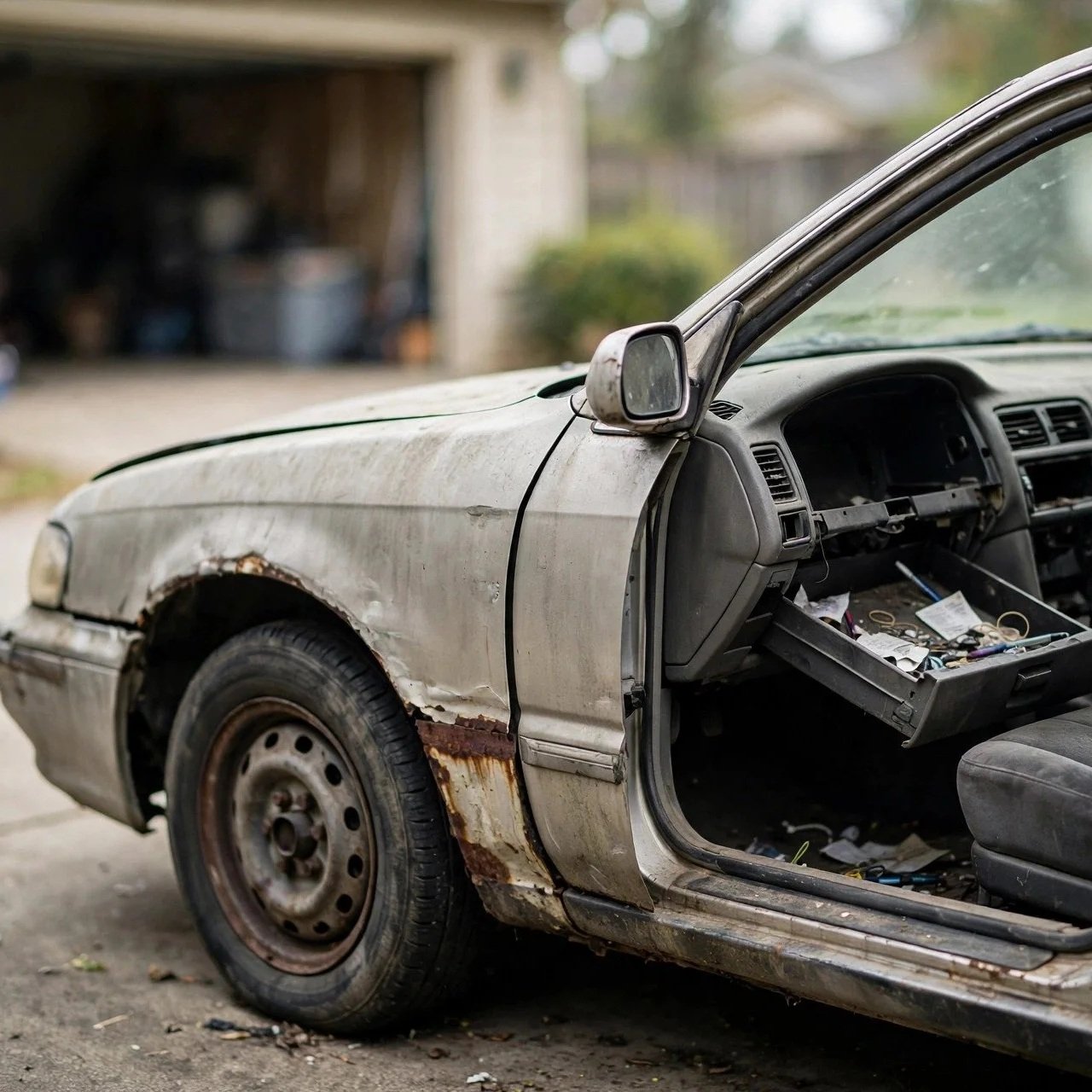
You finally call a junk buyer to haul the old car away, the conversation is going fine, and then comes the question: do you have the title? You go to check, dig through the drawer where the car paperwork lives, and come up empty. Old insurance cards, a faded oil-change receipt, a dead pen, but no title. Maybe you never got the paper copy, maybe it vanished during a move, maybe the person you bought the car from never signed it over to you in the first place.
Here is the reassuring part. A missing title does not automatically mean you are stuck with the car. In plenty of situations, you can still sell it to a junk buyer, as long as you can show the car is yours. What follows is the practical process most reputable buyers walk through, what they typically ask to see, and what your options are when the title is truly gone. Requirements change from state to state and from buyer to buyer, so treat this as a map of how the process usually works, then confirm the specifics with the buyer you call and your state titling agency.
Why the Title Matters in the First Place
A title is the single document that says the car belongs to you. When a buyer takes the vehicle, they are not just hauling away scrap. They have to account for that car: transfer it out of your name, then either resell it, part it out, or send it to a licensed recycler, who will cancel the vehicle for good. The title is the clean paper trail that lets all of that happen and protects both sides from a dispute later.
That is why a buyer asks about the title before the truck ever rolls. It is also why a serious buyer will not just wave the question away. The paperwork is how they prove they came by the car honestly, and how you prove you had the right to sell it. When the title is missing, the buyer is looking for other documents that add up to the same thing: proof that you are the rightful owner.
The Documents You Usually Need to Sell
Even without a title in hand, you can often build a strong case for ownership out of documents you already have. The exact combination a buyer accepts varies, but these are the ones that come up most often.
| Document | Why the buyer wants it |
|---|---|
| Government photo ID | Confirms who you are and that your name matches the ownership paperwork |
| Vehicle title | The primary proof of ownership lets the buyer transfer or recycle the car cleanly |
| Current or recent registration | Ties the car and its VIN to your name when the title is missing |
| Bill of sale | Records the handoff: the vehicle, the amount, the date, and both parties |
| Lien release (if the car was financed) | Shows the loan is paid off, and the lender no longer has a claim on the car |
Registration does a lot of quiet work here. It is not the same as a title, but it links your name to the exact vehicle by its VIN. For an older or low-value scrap car, many buyers will accept a registration in your name plus your ID as reasonable proof of ownership. A signed bill of sale, sometimes notarized, often rounds out the file. If the car was ever financed, expect the buyer to ask whether the loan is fully paid, because a lender with an open lien still has a claim on the vehicle until that lien is released.
How a Reputable Buyer Verifies You Own the Car
Once you call, a careful buyer runs a few quick checks before agreeing on a price. None of this is meant to trip you up. It is the same verification that protects you from selling into a mess later.
The first stop is the VIN, the 17-character vehicle identification number. You will find it stamped on a small plate where the dashboard meets the windshield on the driver's side, and again on a sticker inside the driver's door jamb. The buyer matches that number against your registration to confirm the paperwork describes the actual car sitting in your driveway, not a different vehicle. They may also run the VIN to make sure the car is not reported stolen and to see whether the title is branded salvage or junk from a past insurance write-off.
Next comes your ID. The name on your license should match the name on the registration or other ownership documents. If they match, the buyer can be confident they are dealing with the owner. If they do not match, say the registration is in a spouse's name or a parent's name, the buyer will usually ask for a little more, such as that person's signature on a bill of sale or their presence at pickup. A buyer who records the VIN, checks your ID, and writes up a bill of sale is doing the job right.
What to Do If You Truly Have No Title
Sometimes the title is not just misplaced, it is long gone, and no registration is handy either. You still have moves.
Start by asking whether you can order a replacement title. Most state titling agencies will issue a duplicate to the registered owner, generally after you show ID, provide proof that the car is yours, and pay a small fee. It usually takes a few business days to a few weeks. If you have the time, a duplicate title is the cleanest path and tends to keep more buyers and more value in play.
If you cannot wait or cannot get a duplicate, ask the buyer directly what they can work with. Depending on the state and the vehicle, some buyers accept a current registration plus your ID, a notarized bill of sale, or a sworn affidavit of ownership for an older scrap vehicle. This is exactly where requirements diverge the most, so the smart step is a phone call: tell the buyer what you have, and let them tell you what they can accept before anyone schedules a tow.
Watch out for one common snag, the so-called open title. That is when the last title was never signed over into your name, so the paperwork still shows a previous owner. In that case, a buyer may need the prior owner to sign, or may point you back to the titling agency to sort ownership out first. It is workable, but it is why "I have the title, it just has someone else's name on it" is not the same as having a clean title.
How to Tell a Legit Buyer From a Scam
The title question is also a quick way to size up who you are dealing with. A trustworthy buyer treats the paperwork as normal business. A shady one treats it as an obstacle to rush past.
A reputable operation is licensed and insured, gives you a clear written or verbal quote up front, asks for your ID and proof of ownership, and provides a bill of sale for your records. They pay you at or before pickup, and they tow the car with proper equipment rather than dragging it up a ramp and hoping. If a buyer refuses to put anything in writing, will not explain how they handle the paperwork, pressures you to decide on the spot, or asks you to pay for the towing on a junk car they are buying, those are reasons to slow down and call someone else.
A few housekeeping steps protect you regardless of who buys the car. In most states, the license plates stay with you, not the vehicle, so remove them before the truck arrives. Clear out the glovebox, center console, trunk, and under the seats, because personal items and old paperwork have a way of hiding in a car you have owned for years. And once the car is gone and the sale is recorded, notify your insurer so you are not paying to cover a vehicle you no longer own.
The One Question to Ask Before You Commit
An empty glovebox feels like a dead end, but for most junk cars, it is really just a detour. The buyer needs to know the car is yours, and the title is the easiest way to show that. When it is missing, a registration in your name, your photo ID, a bill of sale, and a quick VIN check often carry the same weight. The one habit worth keeping through all of it is simple: before you commit, tell the buyer exactly what documents you have and ask what they can accept. A buyer who answers that question plainly, prices the car fairly, and hands you a receipt is the one worth calling back.
Frequently Asked Questions
The path depends on who holds the title now. If the car was financed and the loan is not paid off, the lienholder still controls the title, so the duplicate has to be released or requested through the lender, not just the state. In states that have moved to electronic titles, there may be no paper to replace at all, since the record lives in the state's system and gets released when ownership transfers. And if you are in a hurry, ask whether your state offers expedited or same-day counter service instead of the standard mail-in duplicate, because many do for an added fee. A junk buyer can often take the car while a duplicate is still pending, so ask before you assume you have to wait.
A useful bill of sale names both the buyer and seller with addresses, the sale date, the price, and a clear description of the car: year, make, model, and the full VIN. It is good practice to record the odometer reading and to note that the vehicle is sold "as-is." Both parties sign, and some states or buyers require notarization. Keep your copy, since it is your proof of when the car left your hands.
Yes, and while you are at it, pull anything else that is tied to your name. A toll transponder or a paid parking or gate permit on the windshield should come off, since it is linked to your account and can keep charging after the car is gone. Bring a screwdriver, because the plate-bracket screws on an older car are often rusted in place, and a driver on a tight schedule will not want to fight them. In some states, physically returning the plates to the titling agency is what actually stops the registration clock and any renewal billing, so a quick check on that can save you a fee later.
This is different from a simple lost title because ownership has to pass through the estate first. Buyers will usually ask for estate paperwork, such as documents naming an executor or administrator, before they can accept the car. The exact requirements vary, so confirm with both the buyer and your state titling agency what proof they need before scheduling anything.
The title is the ownership document; think of it as the deed to the car, generally issued once and updated only when the car changes hands. Registration is your permission to drive the car on public roads, renewed on a set schedule, and showing the current owner and VIN. Buyers prefer the title because it proves ownership outright, but a current registration in your name is often the next-best evidence when the title is missing.
A junk car's value is driven mostly by its weight, metal content, catalytic converter, and whether parts are still usable, not by the paperwork alone. Still, a missing title can narrow the pool of buyers willing to take it and can trim an offer, because the buyer takes on extra work to verify and transfer ownership. Ordering a duplicate title beforehand often widens your options and helps you hold onto more of the car's value.
Sitting on a car you want gone but missing the title? Call and tell us what paperwork you have, and we will walk you through what works. Auto Wreckers Milwaukee Towing & Recycling serves Milwaukee, West Allis, Waukesha, and the surrounding southeastern Wisconsin metro. Call (414) 441-2719.
