
Are Junk Trucks and SUVs Worth More Than Cars? What Tips the Scale
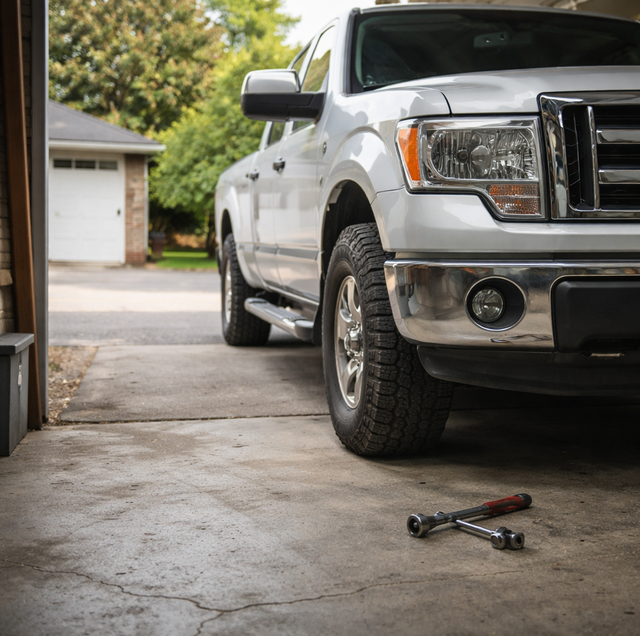
You have an old pickup rusting in the yard, and a tired sedan in the driveway, and only one of them is going to a buyer this month. The question that decides which one goes first is simple to ask and easy to guess wrong: does the truck bring more than the car just because it is bigger? Most of the time the answer leans yes, and there are solid, physical reasons for it. But "bigger vehicle, bigger check" is a rule of thumb, not a law, and plenty of trucks come in under a car that happens to be complete and heavy for its class. Knowing why the truck usually wins, and the handful of times it loses, lets you pick the right one to sell and read the offer you get without second-guessing it.
Why the Heavier Vehicle Usually Wins at the Scale
Start with the one number that sets the floor under any junk vehicle: what it weighs. A dead car or truck is priced first as a pile of recyclable metal, and metal sells by weight. Buyers work from curb weight, the weight of the vehicle empty of fuel, cargo, and passengers, then multiply it by whatever scrap steel is trading for that week. A vehicle is mostly steel, the ferrous metal that makes up the low end of the scrap market, so the more of it you roll onto the truck, the higher the base pays.
The gap between a car and a truck at the scale is not small. A compact car might weigh around 2,800 pounds. A midsize sedan sits closer to 3,300. A body-on-frame SUV runs 4,500 to 5,500, and a full-size pickup or work van can top 6,000. Scrap trades per ton, and a ton is 2,000 pounds, so a full-size truck can carry a full ton of steel more than a compact car. That extra tonnage is the single biggest reason the truck tends to quote higher before anyone even looks at the parts. Two identical-condition vehicles, one a hatchback and one a crew-cab pickup, will spread apart on weight alone.
Weight is also why the scrap market itself matters more on a heavy vehicle. Steel prices move week to week with mill demand and export orders, and there is no fixed rate any buyer can promise. When steel is strong, the truck's weight advantage is worth more; when it softens, the truck loses more of its lead than the car does, because the truck has more tonnage exposed to the swing. The heavier the vehicle, the more its value rides on the metal market that particular week.
Body-on-Frame vs Unibody: Where the Extra Metal Lives
Weight alone does not tell you why trucks are built heavy. The reason is how they are put together. Most trucks and traditional SUVs use body-on-frame construction: a thick steel ladder frame runs the length of the vehicle, and the cab and bed bolt on top of it. That frame is heavy-gauge steel meant to carry loads and tow, and it is dense, recyclable weight a car simply does not have. A car, and most modern crossover SUVs, use unibody construction instead, where the body and structure are one welded shell of thinner stamped steel. Lighter to build, lighter to drive, and lighter on the scale when it is dead.
The drivetrain follows the same pattern. A truck built to haul carries a bigger engine block, often a V8, a heavier transmission, and a driveshaft and rear axle sized to match. Iron and steel in those components add up fast. A four-wheel-drive truck adds even more: a transfer case, a front differential, a front axle assembly, and an extra driveshaft, all of it dense metal bolted under the vehicle. So the truck is not just physically larger; it is built out of thicker, heavier stock in nearly every structural piece, and every one of those pieces is weighed when the vehicle is recycled.
This is also where the region quietly reshapes the math. Road salt worked into slush against winter ice is exactly what attacks a ladder frame, feeding rust into the seams from the underside up, and heat and moisture keep corrosion working the rest of the year too. On a body-on-frame truck, the frame is both the value and the vulnerability: a solid frame is a slab of premium weight, while a frame rusted through can drop the vehicle toward parts-only value even though the engine still runs. The construction that makes a truck heavy is the same construction the environment goes after first.
The Parts a Truck Has That a Car Doesn't
Above the scrap floor sits the resale value of parts a dismantler can pull and sell to other owners, and this is where trucks and SUVs open a second lead. The parts market for light-truck components is deep, because the trucks that need replacement parts stay on the road for decades and their owners keep fixing them.
Think about what a pickup carries that a sedan never had. A truck bed and tailgate are sought-after bolt-on panels, and the tailgate in particular is a common theft and resale target because a clean one sells fast to someone with a dented truck. Larger engines and heavy-duty transmissions are expensive to replace, so a good drivetrain pulled whole is worth real money as a running core. Four-wheel-drive hardware, the transfer case and front differential, has its own steady demand from owners rebuilding trucks that see plow duty and rough roads. Even the wheels tend to be larger, often heavier steel or aluminum, adding both non-ferrous weight and resale as a matched set.
The catalytic converter is the last piece, and it usually favors the truck too. A converter is worth far more than its weight in steel because its ceramic honeycomb is coated with platinum, palladium, and rhodium, precious metals that trade on the same markets as gold. A larger engine generally needs more converter to clean its exhaust, and many trucks and SUVs run two of them, one on each bank of a V8 or one per exhaust path. More converters and heavier precious-metal loading mean that a single line item tends to add more on a truck than on a small economy car. It is the reason a buyer always asks whether yours is still bolted on.
Here is how the two stack up, factor by factor:
| Factor | Typical Car | Typical Truck or Body-on-Frame SUV |
|---|---|---|
| Curb weight | 2,600 to 3,600 lb | 4,500 to 6,500 lb |
| Construction | Unibody, thinner stamped steel | Ladder frame plus body, heavy-gauge steel |
| Drivetrain metal | Smaller engine, lighter transaxle | Larger block, heavy transmission, axles, driveshaft |
| Drivetrain-only parts | Front-wheel drive, few extras | Possible 4x4: transfer case, front diff, extra shaft |
| Signature resale parts | Doors, glass, panels | Bed, tailgate, larger drivetrain, 4x4 hardware |
| Catalytic converter | Often one, smaller loading | Often larger, sometimes two |
| Aluminum content | Wheels, radiator | Wheels, radiator, some newer aluminum bodies |
When a Truck Isn't Worth More
The weight-and-parts advantage is real, but it is a starting position, not a guarantee, and a buyer prices the vehicle in front of them rather than the average for its type. Several situations close the gap or flip it.
- A stripped truck loses its edge fast: The truck's lead depends on the expensive parts still being there. If the converter was sawed off, the bed and tailgate are gone, and the 4x4 hardware was pulled, what is left is mostly a rusty frame priced near the scrap floor. A complete sedan can out-quote a gutted pickup without any trouble.
- A rusted-through frame erases the weight bonus: A frame eaten past the point of safe repair is worth its steel, but a buyer also has to handle a vehicle that may not be safe to winch or roll normally, and the parts value drops with it. The heavy frame stops being a premium and becomes just tonnage.
- A seized engine and dead drivetrain reset the parts math: Much of a truck's parts premium assumes the big engine and transmission still turn and can be resold as cores. A locked-up motor or a blown transmission settles the vehicle back toward metal-plus-salvageable-parts, narrowing the distance to a car.
- A crossover is closer to a car than a truck: Many vehicles called SUVs are unibody crossovers built on car platforms. They weigh little more than a large sedan and lack the ladder frame and heavy 4x4 gear, so they quote much closer to a car than a full-size body-on-frame truck does.
- The market can level things out: When scrap steel is soft, the truck's tonnage advantage shrinks in dollar terms, and a car with a high-value converter and clean, resellable panels can land surprisingly close.
None of that undoes the general rule. It just means the honest answer is that a truck or SUV usually beats a comparable car, if it is complete, structurally sound, and carrying its drivetrain and converter. Take those away, and you are back to pricing metal.
Reading Your Own Two Vehicles
So which of yours goes first? Line them up on the same three questions a buyer will. First, weight: the truck almost always wins here, and by a wide margin against a compact. Second, completeness: whichever vehicle still has its converter, drivetrain, and major panels holds its value, and a whole car can beat a picked-over truck. Third, structure and drivetrain condition: a truck with a solid frame and an engine that still turns keeps its full premium, while one with a rotted frame or a seized motor gives most of it back.
Run both vehicles through those three and the picture usually clears up quickly. A complete, solid pickup is almost always the better sell than a comparable car, and a heavy work van or a body-on-frame SUV lands in the same tier. A stripped or frame-rotted truck, on the other hand, may bring no more than a clean sedan, and sometimes less. Weight opens the truck's lead, parts and condition decide whether it keeps it, and the metal market that week sets how much the whole thing is worth in dollars. Have the make, drivetrain, and honest condition ready when you call, and the number you hear will match the vehicle you actually own instead of a national average.
Frequently Asked Questions
Often, for two reasons the gas version does not share. A diesel engine block is a heavier casting with more iron in it, so it adds ferrous weight, and diesel cores stay in strong demand because rebuilds are expensive and owners keep these trucks running a long time. Diesels also carry extra emissions hardware, a diesel particulate filter and usually a larger converter, that a dismantler values separately. The catch is that a diesel with a cracked block or a failed injection system loses much of that core premium, so condition still rules.
Usually yes, as long as the four-wheel-drive parts are intact. The transfer case, front differential, and front axle assembly are dense metal and sought-after used parts for owners rebuilding trucks that plow or work off pavement. Where it goes sideways is a seized transfer case or a 4x4 system that has not worked in years; then it is weight, not a resellable part, and the premium over a two-wheel-drive version shrinks to almost nothing.
Probably not, and there is a quick way to settle it yourself. Look underneath. A truck-type SUV has two thick steel rails running the full length of the vehicle with the body bolted on top, a ladder frame, while a crossover shows a flat stamped floor pan and no separate rails, because its body and structure are one welded unibody shell. A Toyota 4Runner, a Jeep Wrangler, or a Chevy Tahoe rides on a frame and prices in the truck tier; a Honda CR-V, a Toyota RAV4, or a Subaru Outback is unibody and weighs close to a large sedan, so it prices much nearer a car. Knowing which one is under you sets a realistic expectation before you call.
It is a trade-off. Aluminum is non-ferrous and pays more per pound than the plain steel body, so a buyer sorts it out and weighs it on its own. But aluminum is lighter, so an aluminum-bodied truck carries less total weight than an all-steel one of similar size, which can offset the higher per-pound rate. The frame and drivetrain on those trucks are still steel and iron, so the vehicle keeps most of its truck-tier weight regardless. The net effect depends on how a given buyer separates and prices the two metals that week.
Tailgates and catalytic converters are two of the most stolen parts on a truck, precisely because they sell fast and come off quickly, and a tailgate stolen off the truck is money gone before the buyer ever arrives. If it has to sit outdoors while you wait on pickup, park it tight against a fence or a building so a converter saw cannot reach underneath, back it in so the tailgate is awkward to drop, and pull any easy interior valuables. The 4x4 hardware is the opposite case: a transfer case or front differential is heavy and bolted in deep, so it is rarely worth a thief's time, and rarely worth your own effort to pre-pull either, since taking one out safely means getting the truck in the air and dealing with the fluids. Securing what is easy to grab beats stripping the truck yourself.
Like trucks, and sometimes higher. A full-size cargo van is heavy, frequently body-on-frame, and built around a large engine and a heavy-duty transmission, so its scrap floor sits up in the truck tier. Vans also give up steel panels and sliding doors that other fleet owners buy to keep their own vans on the road. The one thing that pulls a van down is the same as any vehicle: strip the drivetrain and converter or rot the floor and frame, and it settles back toward plain metal value.
Turn that old truck, van, or SUV into cash — get a real, no-obligation quote with free towing and same-day pickup. Auto Wreckers Milwaukee Towing & Recycling serves Milwaukee, West Allis, Waukesha, and the surrounding southeastern Wisconsin metro. Call (414) 441-2719.
