
When Is Rust Bad Enough to Junk a Car? How to Tell
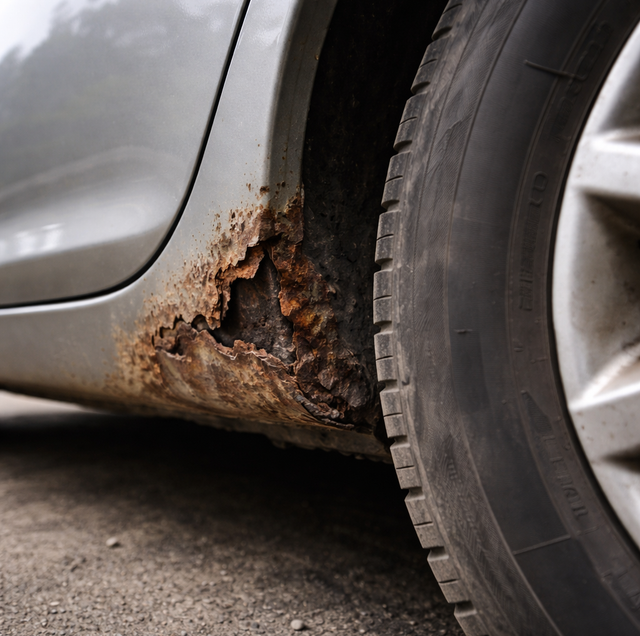
Quick Answer: The trigger is not how much orange shows on the outside; it is where the rot has settled. A fender can freckle and bubble for years while the steel that matters stays solid, and a car that looks clean in the driveway can be rotting through its frame rails and floor pans out of sight. A spot near the rear wheel that flakes loose under thumb pressure and lets daylight through is the moment the question turns urgent.
How bad does rust have to get before a car is actually finished? The trigger is not how much orange shows on the outside; it is where the rot has settled. A fender can freckle and bubble for years while the steel that matters stays solid, and a car that looks clean in the driveway can be rotting through its frame rails and floor pans out of sight. A spot near the rear wheel that flakes loose under thumb pressure and lets daylight through is the moment the question turns urgent, and answering it means reading the difference between rust that only looks bad and rust that has gone deep.
These are really two problems wearing one color. One is cosmetic and lives on the skin of the car; the other eats the bones, quietly hollowing out the parts that hold it together on a car that can still look clean in the driveway. Knowing which one you are looking at separates a car worth keeping from one that belongs on a flatbed to the recycler.
Surface Rust vs. the Rust That Ends a Car
Surface rust is the orange freckling on a fender, a bubble creeping out from a stone chip, a rough brown film on the tailgate or the hood edge. It sits on panels that carry no load. It looks worse than it is, and while it will spread if you ignore it, it is not deciding whether the car holds its shape in a crash. Sanded, treated, and painted, that same spot can stay quiet for years. Plenty of otherwise solid cars drive around with cosmetic rust and are perfectly safe.
Structural rust is a different animal. It attacks the steel that carries the weight of the car and absorbs the forces of driving and stopping: the frame or unibody, the rocker panels under the doors, the floor pans, the mounts that hold the subframe and suspension, and the towers that anchor the struts. When that metal thins and perforates, the car is losing the structure it depends on to stay together over a pothole, in hard braking, or in a collision. The cruel part is that structural rust hides. It works inside boxed sections and seams you cannot see, so by the time it shows on the surface, the metal behind it is often already paper-thin.
The quick test: if the rusty part could fall off and the car would still drive and protect you, it is cosmetic. If it holds the car from folding, flexing, or dropping a wheel, it is structural, the kind that condemns a car.
The Parts Rust Is Allowed to Kill
Not all steel on a car is equal. A handful of components do the load-bearing work, and rot in any of them is the serious kind.
Frame rails and unibody rails: The long steel backbones, either a separate ladder frame under a truck or the boxed rails welded into a car's unibody, that carry the vehicle and tie the front and rear together. Perforation here, especially near the suspension pickup points, is close to an automatic end.
Rocker panels: The boxed sections under the doors along the bottom of the body. On a unibody car, they are a major part of how the shell stays rigid, which is why rotted rockers let a car flex and creak over bumps.
Floor pans: The stamped steel floor you sit above. Small pinholes are common on salt-belt cars, but wide rot lets seat mounts, seatbelt anchors, and pedal brackets lose the metal they bolt to.
Subframe and crossmember mounts: The brackets and cradles holding the engine subframe, control arms, and spring or trailing-arm hangers. When these rot, a suspension component can tear loose from the body.
Strut and shock towers: The domed mounts in the engine bay and rear wells that anchor the top of each strut. Under constant pounding, a rusted-through tower can let the strut push up into the fender.
Brake and fuel lines: The steel tubing routed along the underbody. Salt pits and perforates these lines, and a brake line that rusts through fails when you press the pedal hard, exactly when you need it most.
Why Salt Rots a Car From the Inside Out
Rust needs steel, oxygen, and water, and winter road salt supplies a fourth accelerant. Salt draws and holds moisture against the metal, keeps it wet long after the road looks dry, and dissolved in that film, it speeds the reaction along like an electrolyte in a battery. That is why cars in regions that salt their roads rot years faster than the same car in a dry climate.
It is easy to blame winter alone, but the corrosion never fully stops. Salt does the loud damage in the cold months, then road spray, humidity, condensation inside the frame, and mud packed into the rockers keep the underside damp the rest of the year too. Rust runs year-round; winter just supercharges it.
The reason it does structural harm is where it collects. The load-bearing pieces are mostly hollow boxed sections, and salt water works inside through seams, spot-weld gaps, and drain holes clogged with debris. Trapped there with no airflow, the metal corrodes from the inside out. A rail or rocker can look solid and painted outside while the inner wall has already turned to scale and lace, so by the time a stain or bubble reaches the surface, the wall behind it has lost most of its thickness. That hidden progression is what makes structural rust so much more dangerous than the freckles on a fender.
How to Tell How Far It Has Gone
You do not need a lift to get a rough read, just a flashlight, a plastic sheet to lie on, and a screwdriver or a small pick. Work along the underside and check the load-bearing pieces, not the pretty panels.
- Look for scale and lift: Solid steel with surface rust is rough but flat. Steel that is failing puffs up into layered flakes, like pastry, as the rust underneath expands. Bubbling paint over a frame rail or rocker is a warning that rot is pushing out from inside.
- Do the poke test: Press firmly with the screwdriver on the suspect spot on a frame rail, rocker, floor pan, or subframe mount. Sound metal resists. If the tool sinks in, punches through, or the area caves like a stale cracker, that section has lost its structure. Real thickness does not flex under thumb pressure.
- Tap and listen: A light tap on healthy steel rings with a solid, high note. Rotten steel gives a dull thud and often sheds a shower of rust scale from the inside.
- Check the hidden edges: Peer into the open ends of frame rails and the drain slots along the rockers. Thick crusty buildup and holes on the inner faces mean the corrosion is well along, even if the outside still holds paint.
One soft spot the size of a coin in a floor pan is a patch job. Perforation you can push a finger through on a frame rail, a rocker, a strut tower, or a subframe mount is a different verdict, and it usually is not standing alone.
Why a Rotted Frame Is Hard to Weld Back
The instinct is to have a shop cut out the bad steel and weld in new. Sometimes that works, on an isolated spot surrounded by sound metal. Widespread structural rot is another matter, and there are real reasons a shop may decline the job.
A weld is only as strong as what it joins to, and on a rotted underbody the surrounding steel is thin and corroding too, so the patch tears free at its edge under load. Unibody cars use precise spot welds and boxed reinforcements engineered to crumple a certain way in a crash, and a hand-fabricated patch cannot reliably restore that. Rust also rarely sits in one tidy place; open up one rotted rocker, and the floor and mount behind it are often just as far gone, so the repair keeps growing.
Then there is the safety math a shop weighs. It is signing off that the car is roadworthy, and no one wants to certify a frame that could fail at a suspension mount. This is also where inspections come in: in places that inspect for it, structural corrosion on the frame, subframe mounts, or the brake-line area is a common failure, and inspectors poke the same spots you did. Repairing rust well enough to pass, on a car riddled with it, often costs more than the car is worth.
When Rust Crosses Into Junk-It Territory
Put the checks together, and the line is clearer than it feels in the moment. Rust has crossed into junk-it territory when any one of these is true:
A load-bearing part is perforated: a frame rail, rocker, strut tower, floor structure, or subframe mount you can push through is not a maintenance item; it is the structure failing. When the corrosion is widespread rather than a single patchable spot, a proper repair is no longer realistic. When rot reaches the brakes, fuel lines, or suspension mounts, keeping the car on the road becomes a safety gamble. And when the honest cost to make it sound again climbs past what the car is worth, the numbers have made the call for you.
None of those depend on how the engine runs. A car with a perfectly good motor and transmission can still be finished if the shell underneath has rotted past saving, because you cannot safely bolt a healthy drivetrain to a structure that will not hold it.
What the Car Is Still Worth Once the Body Is Gone
Deciding rust has ended a car is not the same as deciding it is worthless. A rotted structure and a scrap-worthy car are two different judgments, and the second one is usually better news than owners expect.
The value of a junk car does not live in its frame. It lives in two places rust barely touches. The first is the recyclable metal, thousands of pounds bought by weight and by what the metal market pays that week, so a heavier vehicle carries a higher floor no matter how bad the body looks, and non-ferrous metal like aluminum wheels and copper wiring pays more per pound than steel. The second is the parts that still work: a sound engine and transmission, the converter with its platinum, palladium, and rhodium, a good alternator or starter, glass, and unrotted panels. A running car brings more than a dead one and a complete car more than a stripped one, but structural rust zeroes out neither the metal nor the salvageable parts.
So the corrosion that ends the car on the road leaves most of its scrap and parts value intact. Once the structure is confirmed gone, the practical move is to stop spending on it and collect what it is still worth.
Frequently Asked Questions
It is a real gamble, because structural rust tends to fail suddenly rather than warn you. A rail or a subframe mount can hold for months and then let go over one hard pothole, a curb strike, or a hard stop- the worst possible time to lose steering, a suspension arm, or a brake line. Creaking over bumps, doors that no longer line up, or a car that feels loose and flexy mean the shell is already moving under load, and those are reasons to stop driving it, not to wait for the break.
No. Oil-based and coating rustproofing only slow new corrosion on metal that is still sound, so their value is preventive and best applied when a car is young. Sprayed over rust that has already started, a coating can trap moisture and scale against the metal and let the rot continue out of sight underneath. Once a section is perforated, no coating rebuilds the steel that is gone.
There is an important difference between a cosmetic patch panel and structural repair. A slip-on rocker cover bought online hides rust without restoring strength, and tacking one over rot is a cover-up, not a fix. A genuine structural repair means cutting back to solid metal and welding in properly gauged steel, which only holds if the surrounding metal is sound. On a heavily rotted underbody, there often isn't enough good steel left to weld to, which is why the job balloons or gets declined.
They resist it longer but are not immune. Many modern bodies use galvanized (zinc-coated) steel that holds off rust for years, yet the coating still wears at stone chips, seams, and welds, and salt eventually gets in. Aluminum body panels do not rust, but the subframe, fasteners, brackets, and steel reinforcements on an aluminum-intensive car still corrode, and dissimilar metals in contact can actually speed each other's decay. Age, salt exposure, and how the car was stored matter more than the badge.
It depends entirely on where the car lives, because many states have no periodic safety inspection at all. Where there is none, rust rarely stops you directly; it bites at resale when a buyer crawls underneath, on an out-of-state registration or title transfer that triggers a one-time check, or on an emissions and OBD test that a rotted exhaust or corroded sensor bung can flag. In states that do check structure, the mechanic taps a pick-hammer or awl along the boxed frame sections and rockers, and sometimes runs a borescope into a rail to read the inner wall. Once perforation is general rather than a single spot, there is no honest way to patch it clean enough to pass.
Less through the metal than most people expect, because rot does not change curb weight; the shell still carries the same tonnage of steel, so the scrap floor set by weight and the metal market holds. Where severe rot trims the number is handling: a shell rotted so far it no longer rolls, with seized wheels or a unibody that has sagged, is harder to winch onto a flatbed and drag into position than a car that rolls straight, and that labor comes out somewhere. So the deduction for bad structure is mostly a loading cost, not lost weight. The bigger swings still come from whether the converter is attached, whether the engine and transmission turn, and whether the wheels are there.
When rust has ended a car, skip paying to move it and turn it into cash instead — free junk car removal, same-day or next-day pickup, and payment in any condition, running or not. Auto Wreckers Milwaukee Towing & Recycling serves Milwaukee, West Allis, Waukesha, and the surrounding southeastern metro. Call (414) 441-2719.
