
Sell Your Car for Parts or Scrap It Whole? Which Pays More
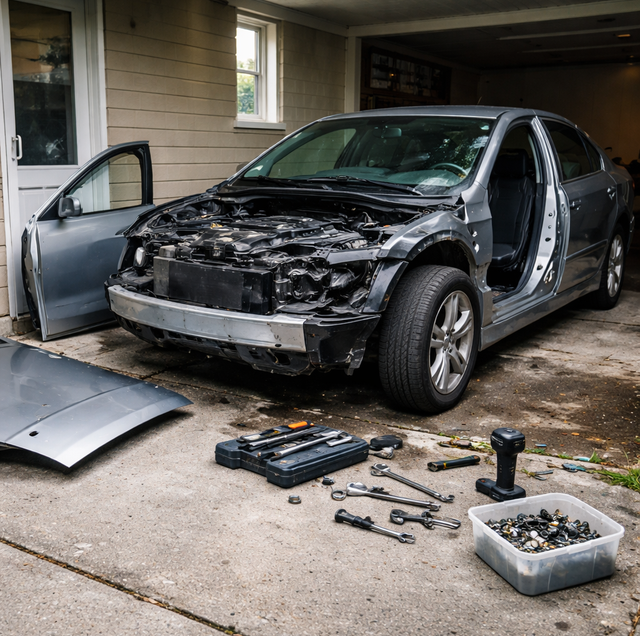
On paper, breaking a car into individual parts almost always beats what a recycler hands you for the whole thing. That single fact makes the parts-versus-whole question so tempting, and so easy to get wrong. A converter, a running engine, a clean set of doors, and four good wheels are each worth real money to someone rebuilding the same model, and the total can dwarf a whole-car offer. What the paper total leaves out is everything it takes to collect it: the tools, the space, the weeks of listing and answering messages, a separate buyer for every piece, and a stripped shell to get rid of at the end.
So the real decision is not which route is worth more in theory. It is which route wins once your own time, tools, and patience come out of the parts total. For some cars and some sellers, parting it out clears enough extra to justify the work. For most people, selling whole to a buyer who already does the dismantling nets close to the same money for a fraction of the effort. The trick is telling which one you are looking at before you start pulling bolts.
What Parting It Out Actually Involves
Parting a car out means turning one vehicle into a shelf of individual listings and selling each piece to whoever needs that exact thing. Done well, it captures more of what the car is worth, because a driver hunting for one good door will pay more for it than a recycler folds into a whole-car number. Done casually, it turns into a half-dismantled car sitting in the driveway for months while the good parts slowly leave and the rest rusts.
Here is the actual list of what sells, roughly in order of what brings the most:
- Engine and transmission: A known-good, lower-mileage drivetrain is usually the single highest-dollar thing on the car. It is also the heaviest and hardest to move, which means an engine hoist, a way to test or at least document that it runs, and freight shipping if the buyer is not local.
- Catalytic converter: Worth far more than its weight in steel because of the platinum, palladium, and rhodium inside. It is also the part thieves target, so an intact converter with readable part numbers is a genuine asset, and a sawn-off stub is not.
- Alternator, starter, and other rebuildable cores: These sell both as working used parts and as cores to rebuilders, who often pay a core charge for the old unit. Water pumps, power-steering pumps, and A/C compressors fall in the same bucket.
- Body panels, doors, hood, and bumpers: Straight, unrusted panels in a common color move fast to people fixing collision damage. Rusted or dented ones are scrap.
- Wheels and tires: A matched set of alloy wheels with tread left on the tires is one of the easier things to sell, and the aluminum has scrap value even when the tires are done.
- Glass, lights, and mirrors: Windshields, headlight assemblies, and side mirrors are steady sellers, especially for models where new ones are pricey.
- Electronics and modules: Infotainment head units, instrument clusters, and control modules can be worth pulling, with one large caveat covered in the FAQ below: many late-model modules are coded to a single VIN and will not simply plug into another car.
Every one of those is a separate transaction. You photograph it, write a listing, field lowball offers and no-shows, package it, and either meet a buyer or ship it. Multiply that by a dozen parts, and you start to see where the weeks go. Parting out is not one sale; it is a part-time job that pays in scattered installments.
The Stripped Shell Nobody Warns You About
The catch that surprises most first-time part-outs is what is left when the valuable pieces are gone: a gutted shell worth almost nothing that still has to be disposed of. A car stripped of its engine, converter, and wheels no longer earns the complete-car premium a buyer pays for an intact vehicle, so its scrap value drops to bare steel, minus the cost of hauling a car that can no longer roll onto a truck easily.
There is also the matter of the fluids. A car is full of them: gasoline in the tank and lines, engine oil, transmission fluid, coolant, brake and power-steering fluid, differential gear oil, and the refrigerant in the air-conditioning system. None of that can go down a drain or into the trash, and the refrigerant in particular has to be recovered with proper equipment rather than vented. A licensed recycler drains and captures all of it as a normal part of processing the car. If you part it out yourself, that step, and the leftover shell, become your problem to solve and pay for. Selling the car whole hands the entire disposal question to the buyer.
What Selling the Car Whole Gets You
The whole-car route trades the higher paper total for speed and simplicity. Instead of a dozen transactions, there is one: you describe the car, agree on a number, hand over the signed title, and the buyer tows it away, usually with the tow included at no cost. Same-day or next-day pickup is common, and you are paid on the spot rather than in dribs and drabs over months.
What makes the numbers closer than the paper total suggests is that a full-service buyer is pricing the same valuable pieces you would sell individually. Their offer already accounts for the converter, the drivetrain, the resellable panels, and the scrap weight of the rest, because dismantling and reselling parts is what they do next. You are selling them the parts wholesale in one move, skipping the tools, storage, listings, shipping, and shell disposal. For a car with only one or two truly in-demand parts, the gap between the two routes can be small once your time is priced in.
That combined value is also why condition and completeness matter so much to a whole-car offer. A car that still has its converter, drivetrain, wheels, and panels is worth more whole than the same car after you have picked the best parts off it. Strip it first and sell the shell second, and you have removed the very things that lifted the offer.
Parting Out vs. Whole: A Side-by-Side
| What to weigh | Parting it out yourself | Selling the car whole |
|---|---|---|
| Top-line total | Higher on paper for in-demand parts | Buyer captures parts plus scrap in one number |
| Time to money | Weeks to months, piece by piece | Same day to a few days |
| Effort and skill | High: pulling, testing, listing, shipping | One call and a signed title |
| Space | A car in the driveway or garage for weeks | Gone at pickup |
| Towing | Your cost to move the leftover shell | Free tow included by many buyers |
| Fluids and shell | You handle disposal and cleanup | Handled by the recycler |
| Fits best | One or two hot parts, buyers lined up, tools and space on hand | You want it gone fast with no fuss |
When Each Route Actually Makes Sense
The honest answer is that neither route wins every time. It depends on the car and on you.
Part it out when:
- The car is a common, in-demand model with a strong parts following, so buyers are actively searching for its pieces.
- You already have a buyer or two lined up for the big-ticket items, especially the engine or transmission.
- You own the tools and a dry, safe place to work and to store a half-dismantled car for as long as it takes.
- The drivetrain is known-good and lower-mileage, which is where most of the parting-out profit actually lives.
- Your time is worth little at the moment, or you enjoy the work and are not counting the hours.
Sell it whole when:
- You need the car gone this week and want the cash now, not spread across two months of listings.
- You have nowhere to keep a stripped shell, or a lease, HOA, or ordinance that frowns on a project car in the open.
- The best parts are already gone: the converter was cut off, the wheels were sold, the engine is seized.
- The frame or rockers are rotted through, which makes the car unsafe to jack up and crawl under to pull anything.
- You do not want to handle gasoline, refrigerant, shipping heavy freight, or a parade of strangers coming to your home.
Which One Nets More Once You Do the Real Math
Compare the two routes on money that actually lands in your hand, not the optimistic sum of every listing. From the parts total, subtract marketplace and payment fees, the freight to ship an engine or transmission across the country, the fuel and hours spent meeting buyers, the parts that never sell and get scrapped anyway, and disposal of the shell and fluids at the end. What is left is your true parts-route number.
Against that, set the whole-car offer, which arrives with a free tow and no further costs. As a general, market-dependent guide rather than a fixed quote, parting out tends to clear a worthwhile premium only when the car has at least one high-value, easy-to-move part, such as a sought-after engine or a clean set of panels, and when you can sell it without paying to ship it. For a stripped, rusted, or unpopular car, the two routes often land within striking distance of each other, and the whole-car sale wins on time. The value of any junk car, whole or in pieces, tracks its weight, metal content, the catalytic converter, whether it runs, and the current scrap market, so both numbers rise and fall together week to week.
The Five-Minute Inventory That Settles It
Before you decide, do a five-minute inventory: whether the car runs, whether the converter and wheels are still on it, whether the engine and transmission are known-good, and how common the model is. Then be honest about your tools, your space, and how many weekends you will spend. A desirable, complete car in the hands of someone with a garage and time can be worth parting out. A tired, rust-heavy daily driver in the hands of someone who just needs it gone almost always sells whole for close to the same real money, minus the hassle.
Frequently Asked Questions
The reliable earners are a running, lower-mileage engine or transmission and the catalytic converter. Past those, a few parts punch above their size: LED and HID headlight assemblies are costly new and sell fast used, and a side mirror carrying a blind-spot camera or other driver-assist sensor is worth far more than a plain mirror. Wheels depend on what they are; a set of factory alloys pulls real money while plain steel wheels sit near scrap. One thing sets fit and price on almost all of it: the year and generation. Buyers cross-reference which model years interchange, so a part off a body style that ran several years finds a buyer quickly, while a one-year-only piece lingers. Rebuildable cores like the alternator, starter, and A/C compressor sell steadily with a core charge on the old unit, but trim clips, worn belts, and rusted brackets are scrap.
The VIN matters constantly while parting out, because buyers use it to confirm a part fits their exact engine, trim, and model year before they commit. The title becomes the sticking point at the end: to dispose of or scrap the leftover shell, a recycler generally needs proof of ownership, so you cannot fully close out the car without it. Selling whole, the title changes hands once at pickup, and the paperwork is done.
They stay your responsibility, and the list runs longer than the fluids. Tires usually carry a per-tire disposal fee at the transfer station, so four worn tires and a spare cost you money rather than adding to the total. Many scrap yards will not take a car with a full fuel tank and will either dock it or ask you to drain the tank and lines first, since a full tank is a fire hazard on their shear. Undeployed airbag modules and seatbelt pretensioners are small explosive devices that have to be handled deliberately, and older cars can hide mercury switches in the hood and trunk lights that count as hazardous waste. A whole-car recycler folds all of that into routine processing; strip the car yourself, and each becomes your errand.
Plan on weeks to a few months, not days, and the calendar works against you in ways that are easy to miss. Demand is seasonal: A/C compressors and condensers move in summer while heater cores and blower motors sell in the cold months, so a part listed off-season can sit until its season returns. Listings also go stale after a couple of weeks and stop showing to buyers, so you keep deleting and reposting to stay visible. The heaviest items, the engine and transmission, sit longest of all, because the buyer pool is either local-only or waiting on a freight quote that often kills the deal. Small parts trickle out one at a time between no-shows and lowball offers. If you need money or space quickly, that alone tips the decision toward selling whole.
Yes, and usually by more than the part was worth to you. A whole-car offer is built on the vehicle being complete, so pulling the catalytic converter, the wheels, or the drivetrain drops the car toward bare scrap value and removes the premium that made the offer worthwhile. The common mistake is selling the converter for quick cash and then finding the whole-car offer fell by a similar amount. Decide on one route and commit to it rather than doing both halfway.
Most private part-outs happen on Facebook Marketplace and eBay Motors, plus model-specific forums and enthusiast groups where buyers hunt for that exact car. Local self-service yards sometimes buy a whole car for their pull-your-own lot. Rebuildable cores can go straight to a rebuilder for a core charge. Each channel has its own fees, shipping expectations, and share of tire-kickers, part of why the parts total on paper shrinks by the time the money is in hand.
Skip the months of listings and pull one number for the whole car — free towing, same-day or next-day pickup, and cash for it running or not, complete or stripped. Auto Wreckers Milwaukee Towing & Recycling serves Milwaukee, West Allis, Waukesha, and the surrounding southeastern Wisconsin metro. Call (414) 441-2719.
