
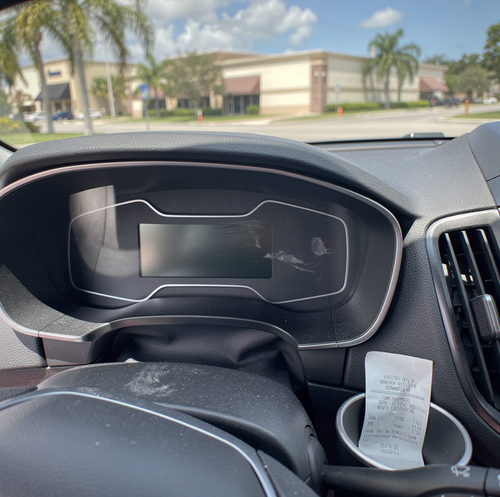
A car with 210,000 miles on the odometer looks like a write-off to most owners, while a car with 60,000 miles feels like it should be worth real money even with a cracked engine block. Neither assumption holds up once you look at how a scrap or junk vehicle actually gets priced. The number on the dash tells you how far a car has traveled, not how much steel sits under it, whether the drivetrain still has resale life, or what the title in the glovebox says. Mileage does play a small role in the conversation. It just is not the lever most sellers think it is, and knowing where it actually fits keeps you from guessing at a number based on the wrong measurement.
What a High Odometer Reading Actually Tells a Buyer
Mileage is a proxy for wear, nothing more. A high number suggests more cycles on the piston rings, more heat cycles through the transmission, more miles of vibration working on bushings and wheel bearings. For a car headed back onto the road, that proxy matters because a buyer is paying for years of remaining service life. For a car headed to be scrapped for metal and parts, that proxy carries little weight, because nobody is buying years of remaining service life. They are buying the material and the components that are still sound right now.
That distinction is easy to miss because most people only ever shop for cars in the resale market, where mileage is one of the first numbers anyone asks about. A junk or scrap sale runs on a different set of questions entirely, and the odometer is far down that list.
What Actually Sets a Scrap Car's Price
Weight and metal content: a car is priced based on scrap steel value first, and that number comes from curb weight, not the odometer reading. A heavier sedan or a full-size truck carries more tonnage of steel, aluminum, and copper than a compact car, and that weight sets a floor value regardless of how many miles are on the clock. A light car with 30,000 miles and a light car with 230,000 miles land on roughly the same scrap floor, because the metal itself did not change.
Working parts and drivetrain condition: an engine, transmission, alternator, starter, or set of aluminum wheels that still function can be pulled and resold into the used-parts market, and that resale path is worth more than the same parts crushed for scrap. What matters here is whether those components still work, not how many miles brought them to that point. A transmission that shifts cleanly at 180,000 miles still has resale value to someone rebuilding a similar car; a transmission that is grinding at 40,000 miles does not, no matter how low that number looks on paper.
The catalytic converter: this single part can swing a quote more than almost anything else on the vehicle. It holds platinum, palladium, and rhodium, and those trade on their own precious-metals markets, separate from scrap steel. Whether the converter is present and intact depends on theft history and prior repairs, not on mileage.
Title status: a clean title in your name moves faster and often draws a stronger offer than a lost title, a lien still attached, or a title that was never transferred after a sale. This affects both cars and trucks, running or not, and again has nothing to do with the odometer.
Line those four up and mileage does not appear anywhere in the primary math. It shows up later as a smaller input that shifts a number slightly rather than one that sets it.
Why Mileage Barely Moves the Needle on a True Scrap-Out
Picture two identical sedans, same year, same weight, same body condition, both with a seized engine that will never run again. One shows 45,000 miles, the other shows 215,000. A buyer pricing both for scrap and parts will land close to the same number on both, because the engine in each case is equally dead and equally unsellable as a running unit. The steel weighs the same. The catalytic converter, if it is still there, is worth the same regardless of what the dash reads. A true scrap-out is valued based on what is physically present and functional, and a frozen engine at low mileage is not worth more than one at high mileage.
There is one place mileage nudges the number even on a car being scrapped: ancillary parts that still function get evaluated on their own condition, and a lower-mileage part sometimes commands a slightly better resale price to a rebuilder because it has less wear banked into it. That is a modest adjustment to individual components, not a shift in the vehicle's base scrap price.
Rust changes this equation in a way the odometer never will. Road salt and slush work into the seams of the undercarriage every winter, and a car can run fine on paper while the frame and rocker panels corrode from the inside out. A vehicle with 50,000 miles and a frame eaten through by corrosion has less resale path as a parts car than one with 180,000 miles and a clean, solid frame. Structural condition overrides mileage every time, because a rotted frame has no safe path back to the road and limits what can even be pulled off it.
When Mileage Actually Does Matter
The calculation changes once a vehicle is not a true scrap-out but a running, driving car that still has a place in the used-car or used-parts market. A car that starts, moves under its own power, and could reasonably go back on the road holds resale value beyond its scrap floor, and mileage is one of the factors that sets where in that range it lands. Between two otherwise similar running cars, the one with fewer miles generally carries more remaining life in its major components, which a buyer can price into a higher offer.
This matters most in a narrow band: vehicles that run and drive, have a clean or workable title, and are not so far gone structurally that they are headed for parts regardless. A daily driver with a dead transmission that still has good bones elsewhere leans more toward the scrap-and-parts calculation than the resale one, even if the mileage on the odometer is low. Once a vehicle drops out of that resale band, whether from a blown engine, a rotted frame, or extensive prior damage, mileage stops carrying real weight and the scrap-and-parts factors take back over.
How Buyers Evaluate a Car Over the Phone or Online
Most quotes get built from a short list of questions asked before anyone lays eyes on the vehicle. A buyer typically asks for the year, make, and model, whether the car runs and drives, the condition of the body and frame, whether the catalytic converter is still attached, and the title status. The VIN, if you have it, lets a buyer confirm the factory curb weight and options without a site visit, which is why that seventeen-digit number often matters more to an over-the-phone quote than the mileage does.
Mileage still comes up in that call, but it gets weighed lightly and mostly as a cross-check. A buyer asking about mileage is usually trying to gauge which ancillary parts might already be near the end of their life, not trying to price the car off that single number. A high-mileage car with a recently replaced alternator and starter can be a better parts prospect than a low-mileage car whose electrical components are original and untested. What a buyer cannot see over the phone- rust through the floor pans, a cracked engine block, missing parts- gets confirmed at pickup, and the final number can shift a little once someone looks at the vehicle directly.
| Factor | Weight in a scrap or parts quote |
|---|---|
| Curb weight and metal content | Primary driver, set by the vehicle itself |
| Catalytic converter presence | Major, independent of mileage |
| Working drivetrain and parts | Major, based on function, not mileage |
| Title status | Major, affects who can buy and how fast |
| Frame and body rust | Can override everything else, mileage included |
| Mileage on a true scrap-out | Minor, mostly affects individual part resale |
| Mileage on a running, resalable car | Moderate, one of several resale-value inputs |
Getting an Accurate Read on Your Vehicle
The fastest way to know where a specific car lands is to give a buyer the real details rather than guessing from the odometer alone: the VIN or curb weight, whether it runs and drives, the condition of the frame and body, whether the catalytic converter is intact, and the title status in hand. Mileage is worth mentioning honestly, since it still factors into ancillary-parts pricing and helps a buyer avoid surprises at pickup, but it is one line on a longer list rather than the number the whole offer is built around. A car with 200,000 miles and a sound frame, a working drivetrain, and a clean title can land ahead of a low-mileage car that is rusted through or stripped of its converter, and that gap is exactly why the odometer alone never tells the full price.
Frequently Asked Questions
Yes. Ancillary components like the alternator, starter, AC compressor, and various sensors often outlast the engine's overall mileage figure and get evaluated on their own working condition, not bundled into a single number tied to the odometer. A 200,000-mile engine can still have a functioning alternator and starter sent out for resale, even if the block itself is done.
Yes, and it happens more often than owners expect. Flood damage, fire damage, or a frame corroded through by road salt can put a car with 40,000 miles on the odometer into the same scrap-and-parts category as a much older vehicle, because the structural failure overrides the low mileage entirely.
Most buyers decode curb weight and factory options directly from the VIN, which pulls the exact trim and equipment level rather than a rough average for the year and model. This is one reason a phone quote can be reasonably accurate even before a truck ever gets dispatched.
It can. If the engine was swapped at some point in the vehicle's life, the odometer reading may not reflect the actual wear on that specific engine, so buyers sometimes ask separately whether major components have been replaced rather than relying on the odometer reading alone.
In a sense, yes. A heavier truck or SUV carries more scrap steel regardless of mileage, so the odometer reflects less of the vehicle's total value. On a light compact car, where the gap between scrap value and parts value is already narrow, mileage-driven differences in ancillary-part condition can be a slightly bigger share of the final number.
Yes. An accurate number helps a buyer match the vehicle's paperwork and gives a clearer read on which ancillary parts to check first, which can prevent confusion or a revised number once the vehicle is inspected at pickup. It costs nothing to report it correctly, even on a car being scrapped for parts rather than sold for resale.
Get a free junk car quote — tell us the year, make, mileage, and condition, and get a fair, market-based number with free towing and same-day payment. Auto Wreckers Milwaukee Towing & Recycling serves Milwaukee, West Allis, Waukesha, and the surrounding southeastern Wisconsin metro. Call (414) 441-2719.
