
Waiting for a Tow Truck? 7 Things to Do to Stay Safe
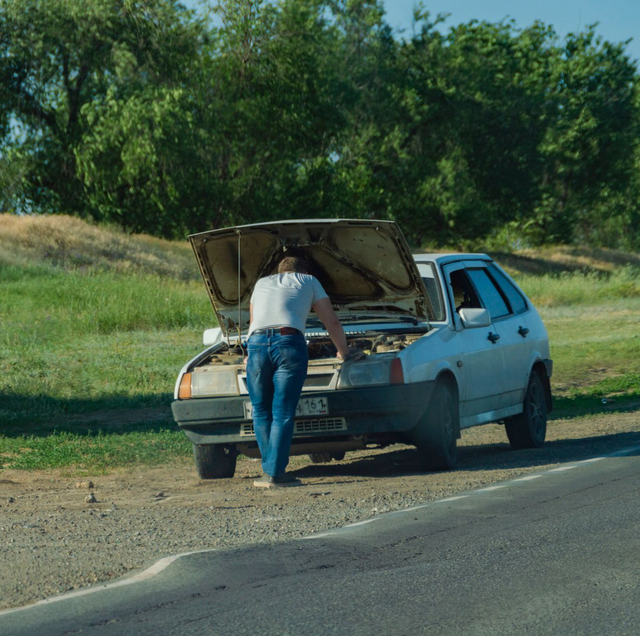
The car is coasting slower than you want it to, a warning light is on, and you already know you are not driving away from this one. You have made the call, a truck is on the way, and now you have a stretch of time to fill on the side of a road with cars going past at speed. That waiting period is the part most people think the least about, and it is also where the real risk sits. The breakdown rarely hurts anyone. Standing in the wrong spot next to a live lane is what does. Here is how to use those minutes well.
What to Do While You Wait for a Tow Truck
Work through these in order. The first few are time-sensitive, so do them before you settle in to wait.
- Get the vehicle completely off the travel lane: If the car still rolls at all, steer it onto the right shoulder, an exit ramp, a parking lot, or the widest flat spot you can reach, and get the whole vehicle past the white fog line. A car half in the lane is far more dangerous than one fully on the shoulder. If the engine has quit but you have momentum, coast as far off as you can before you lose it. Straighten the wheels and set the parking brake once you stop.
- Turn on your hazard lights: Do it the moment you know you are stopping, day or night. Flashers are the one signal every approaching driver reads instantly, and they buy you the seconds that matter. If it is dark, leave your parking or low-beam lights on too so the car reads as a solid object, not a shadow.
- Everyone gets out on the side away from traffic: Once the car is stopped and stable well off the road, the safest place for people is usually out of the vehicle and well back from the pavement, behind a guardrail or up an embankment if there is one. Exit through the doors on the side away from the lanes, never the traffic side. Sitting inside a car that is close to or partly in a live lane is one of the worst places to be, because a distracted driver drifting onto the shoulder hits the car first.
- Set out warning triangles or flares if you carry them: Place reflective triangles behind the car so approaching drivers see the hazard early. On a fast road, the usual spacing is roughly one triangle about 10 feet behind the vehicle, a second near 100 feet back, and a third out around 200 to 300 feet, far enough that a driver has time to move over. Set them out walking toward oncoming traffic while facing it, and skip open flares if you smell fuel or see spilled fluid.
- Pin down exactly where you are: The single thing that gets a truck to you fastest is a precise location. Look for a green mile marker and note the number plus your direction of travel, or the nearest cross street, exit number, or a business sign. Your phone's map can give a road name and a dropped pin with coordinates. Vague directions send a driver circling; a mile marker sends them straight to you.
- Keep your phone charged and stay reachable: The dispatcher or driver will often call back to confirm the spot or tell you they are close. Keep the ringer on and the line free, drop the screen brightness to save the battery, and if the car is safely off the road, you can run the engine briefly to charge from the USB port or 12-volt outlet.
- Gather your belongings and paperwork: Use the wait to collect your registration, insurance card, keys, wallet, phone charger, and anything you will want with you, so you are not digging through the car on the shoulder when the truck pulls up. If the vehicle is going to a recycler or you are selling it, set aside the title and photo ID now.
Mistakes That Put You in Real Danger on the Shoulder
Once you are safely off the road, the biggest threats are the ones people create for themselves by stepping back toward the traffic.
Never stand between your car and oncoming traffic: The rear of the vehicle facing the lanes is the crumple zone if anything hits it, and you do not want to be there. Do not lean on the traffic side to make a call, do not wave your arms at passing cars, and keep children and pets well back from the edge. If you must look at the car, do it from the front or the far side.
Skip the roadside repair that puts you in the lane: Changing a tire, checking under the hood, or crawling under the car on the traffic side of a busy shoulder is how a simple wait turns into a serious injury. A tow is already coming. If a repair cannot be done fully off the road on the safe side, leave it for the truck. The same goes for trying to nurse a dying car a few more miles; a controlled tow beats stalling again in a live lane.
Manage heat and cold instead of ignoring them: In cold weather you can run the engine in short bursts for heat, but only if the car is fully off the road and the tailpipe is clear of snow, mud, or a snowbank, because a blocked exhaust can push carbon monoxide back into the cabin. Run it about ten minutes at a time rather than nonstop. In hot weather, a closed car with no airflow heats up fast, so wait in shade if you can find it, keep water within reach, and never leave children or pets in a parked car in the sun even for a short tow window. Both extremes are a reason to have that location dialed in so the wait is as short as possible.
What to Have Ready When the Truck Arrives
A few seconds of prep makes the handoff quick and keeps you out of traffic longer than you need to be. Have your keys ready to give the driver, and know whether the car is in park with the brake set or needs to roll in neutral. Have your paperwork in hand: registration and insurance for a standard tow, or the title and your ID if the vehicle is being bought or scrapped. Tell the driver anything unusual about the car up front, such as all-wheel drive, a low front lip, a locked steering column, a flat tire, or a car that will not shift out of park, because those change how it gets loaded. Point out where you want it taken, and make sure your personal items are already out or accounted for. Then step back to your safe waiting spot and let the driver work.
Making the Wait the Safe Part, Not the Risky Part
A breakdown feels like the emergency, but by the time you are parked on the shoulder, the danger has mostly shifted to where you put your body for the next half hour. Off the lane, hazards on, everyone out on the safe side and back from the pavement, a clear location passed along, and no wandering toward traffic. Do those and the wait becomes the boring part of a bad day, which is exactly what you want it to be.
Frequently Asked Questions
On a narrow road, a bridge, or a tunnel where there is nowhere to get clear of traffic, the calculation changes. If you cannot reach a spot well away from the lanes, it is often safer to stay buckled inside with the hazards on and the doors locked than to stand exposed with nowhere to retreat, and you tell the dispatcher you are stuck in an exposed spot so they can prioritize it. Never try to cross multiple lanes on foot to reach a median; a narrow center median between fast lanes is usually more dangerous than staying put. When in doubt about an exposed location, call 911, not just a tow line.
It depends entirely on how far off the road you are. On a wide shoulder or in a parking lot with real distance from moving traffic, getting out and waiting behind a barrier is usually safest. When the car is close to a live lane, being inside a vehicle that could be struck is the greater risk, so the better move is to get everyone out on the far side and back from the road. The deciding question is not comfort; it is how much space and protection stand between you and moving cars.
Mile markers are easiest, but plenty of roads do not have them handy. Utility poles often carry small ID numbers, highway overpasses and exit signs are dated landmarks, and the nearest cross street or business address works on surface streets. Your phone can read out GPS coordinates from the map app, and dispatchers increasingly use apps that convert your position into a short three-word address. Give the road name, the direction you were heading, and the last exit or landmark you passed, since which side of the divided highway you are on changes the entire route the driver takes.
Make one clear call first and give your exact location and callback number before anything else, so the truck can still find you even if the phone dies. Then drop the screen brightness all the way, turn off Wi-Fi and Bluetooth, close background apps, and switch to low-power mode. A quick text uses less battery than a long follow-up call. If the car is safely off the road and runs, a short engine cycle will charge the phone from the USB or 12-volt outlet, and a cheap portable battery pack in the glovebox is worth keeping for exactly this.
Be cautious. A passing driver who offers a strap-and-chain pull often does more harm than good, since a chain hooked to the wrong point can tear off a bumper or bracket, and an untrained pull on a car in an awkward spot risks both vehicles and everyone standing near them. It is fine to accept a bottle of water or let someone place a triangle, but keep your professional tow on the way, stay in phone contact with the dispatcher, and do not hand over your keys or get into an unfamiliar vehicle. If anyone makes you uneasy, wait in your locked car and call 911.
For a routine call in a populated area, thirty to sixty minutes is a common window, but it stretches in bad weather, at rush hour, on a holiday, or when you are far from the nearest truck. Storms are the big one: when ice, snow, or heavy rain strands dozens of cars at once, every truck in the area is booked back-to-back, and life-safety calls come first. A dispatcher can usually give you a realistic estimate when you call, and staying reachable so the driver can reach you if they are delayed keeps the whole thing moving. Knowing the wait may be long is one more reason to get yourself into a safe spot and settle in rather than pace the shoulder.
Call the moment you are safely stopped — the sooner a truck is dispatched, the shorter your wait on the shoulder. Auto Wreckers Milwaukee Towing & Recycling serves Milwaukee, West Allis, Waukesha, and the surrounding southeastern Wisconsin metro. Call (414) 441-2719.
